IN THE DESIGN
The other four disciplines
Four disciplines remain in the design and open by degrees. They share a useful circumstance: the restoration of the building requires them in any case, and so the first commission already exists.

Zellij
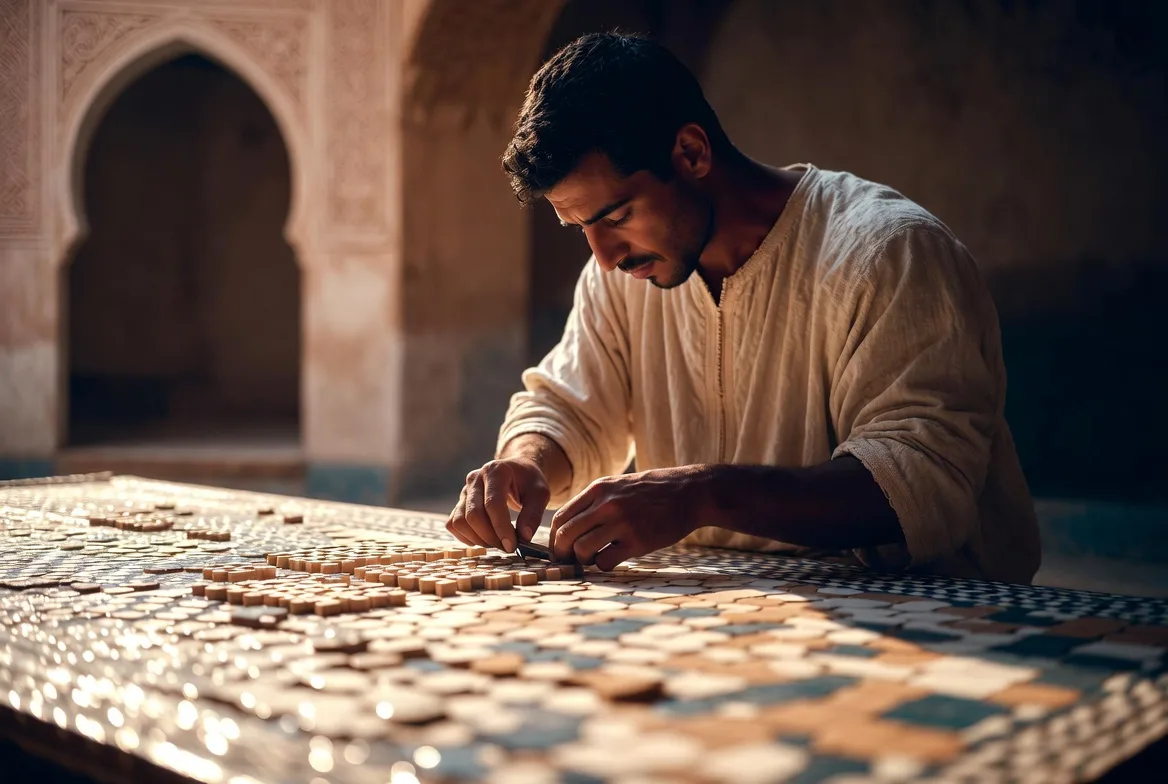
Mosaic of tiles cut with a chisel one by one and composed by geometric tessellation. The technique arises in Ifriqiya between the tenth and eleventh centuries, is codified in the fourteenth, and after the fifteenth survives almost only in Morocco. In the house it is intended for the dados of the great hall, the entrance halls and the fountain, that is, the rooms one looks at from close up and where hand cutting is distinguishable from the machine-cut tile.
NOTE ON SOURCES
On Sicilian ceramics the Islamic period leaves a decisive technical legacy, tin glaze, and a lexical trace that reaches the Spanish azulejo, from the Arabic zillij. From that common stock, however, different roads set out: in Morocco zellij, a mosaic of hand-cut tiles; in Sicily the painted maiolica of Caltagirone, which flourished in the sixteenth and seventeenth centuries, and later that of Santo Stefano di Camastra, born after the refoundation of 1682. The two traditions are not two halves of one language, and in the project they coexist as distinct techniques, each where it belongs.
Plaster and muqarnas
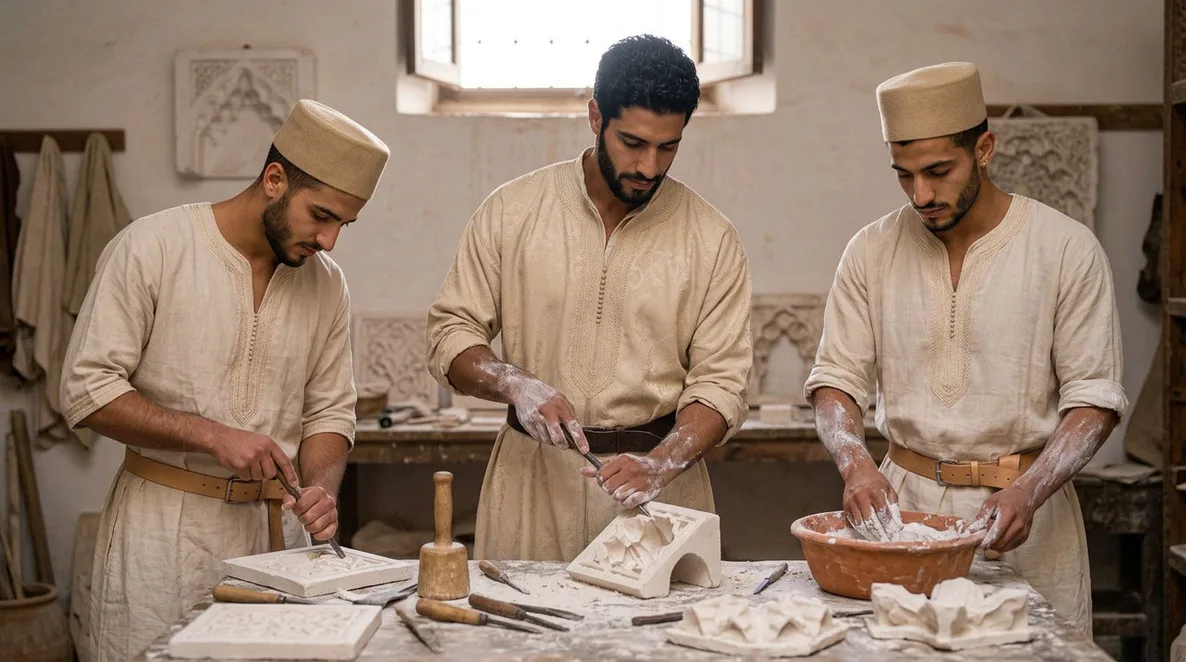
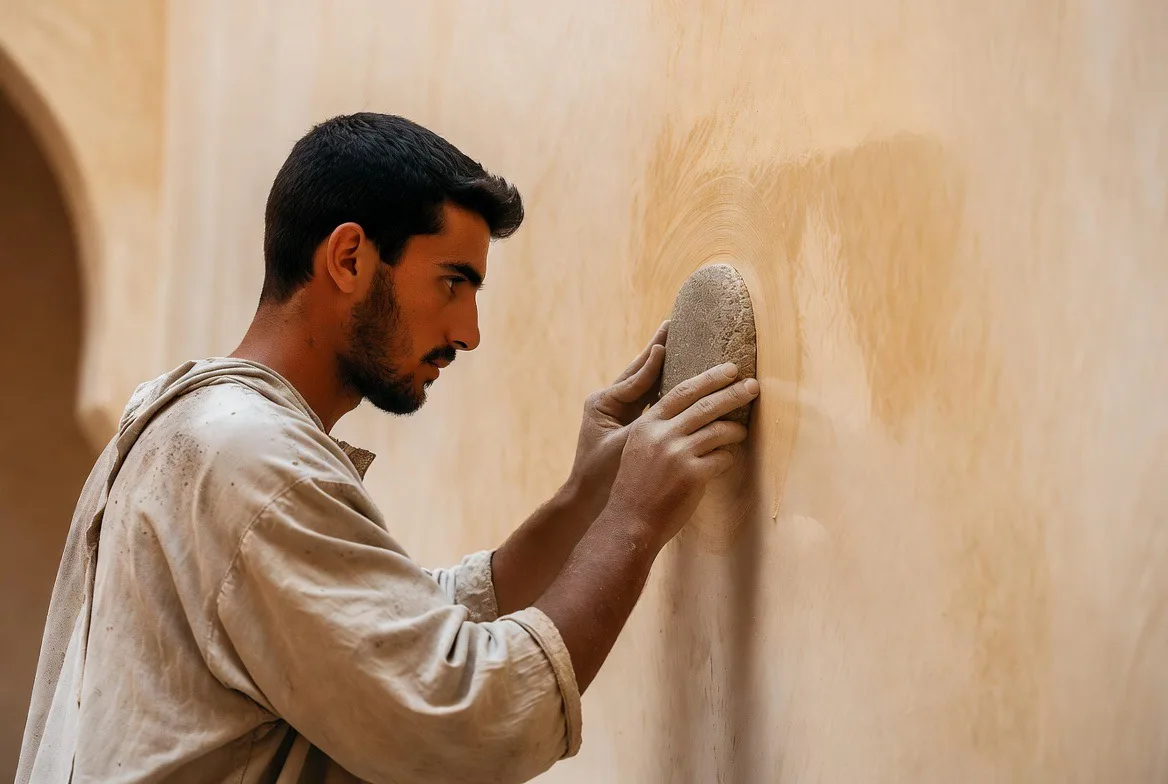
Run and carved stucco, and the honeycomb construction that carries the intrados. It requires moulds, scaffolding and a particular site discipline, because plaster is worked within a setting time that allows no second thoughts. It is the craft that more than any other is learned by standing beside someone who knows it, since the hand has to know which minute it is in.
Weaving and brocade
Looms, warps, dyes and shuttle brocade. The workshop supplies the textiles of the house — outfit, hangings, cushions of the great hall — and works to commission for the restoration of historic interiors and for stage design. Together with the internal tailoring it is also the workshop that makes the members’ working dress sustainable.
Wood and carving
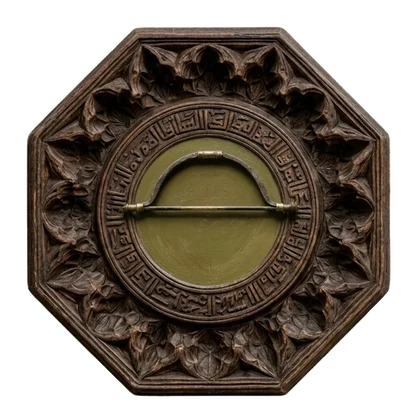
Joinery, made-to-measure windows and doors, lattices and fretwork, timber ceilings and carving. On the restoration site it is the discipline with the heaviest workload: one hundred and eighty square metres of made-to-measure frames on irregular historic openings, one hundred and twenty of lattices, two monumental doors and the ceilings of the west wing. The labour is internal, and only the materials remain in the estimate.