THE LAND
The twenty-three hectares
The twenty-three hectares are worked by a cooperative whose working members are the members of the House. The form has three functions, and none of the three is ornamental.
- 1. It keeps the buildings in agricultural use. It is the condition that holds together the original purpose of the property and the use made of it, and that makes the building application coherent.
- 2. It supplies the table. A community that eats together every day — seventeen people at the opening, about thirty at full strength — has a food bill that the vegetable garden and the field reduce perceptibly, and a calendar the harvest dictates.
- 3. It binds the apprentices to a season. It is the second thing on which every craft tradition has rested, together with the workshop, and it is the one that is missing almost everywhere today.

What is grown
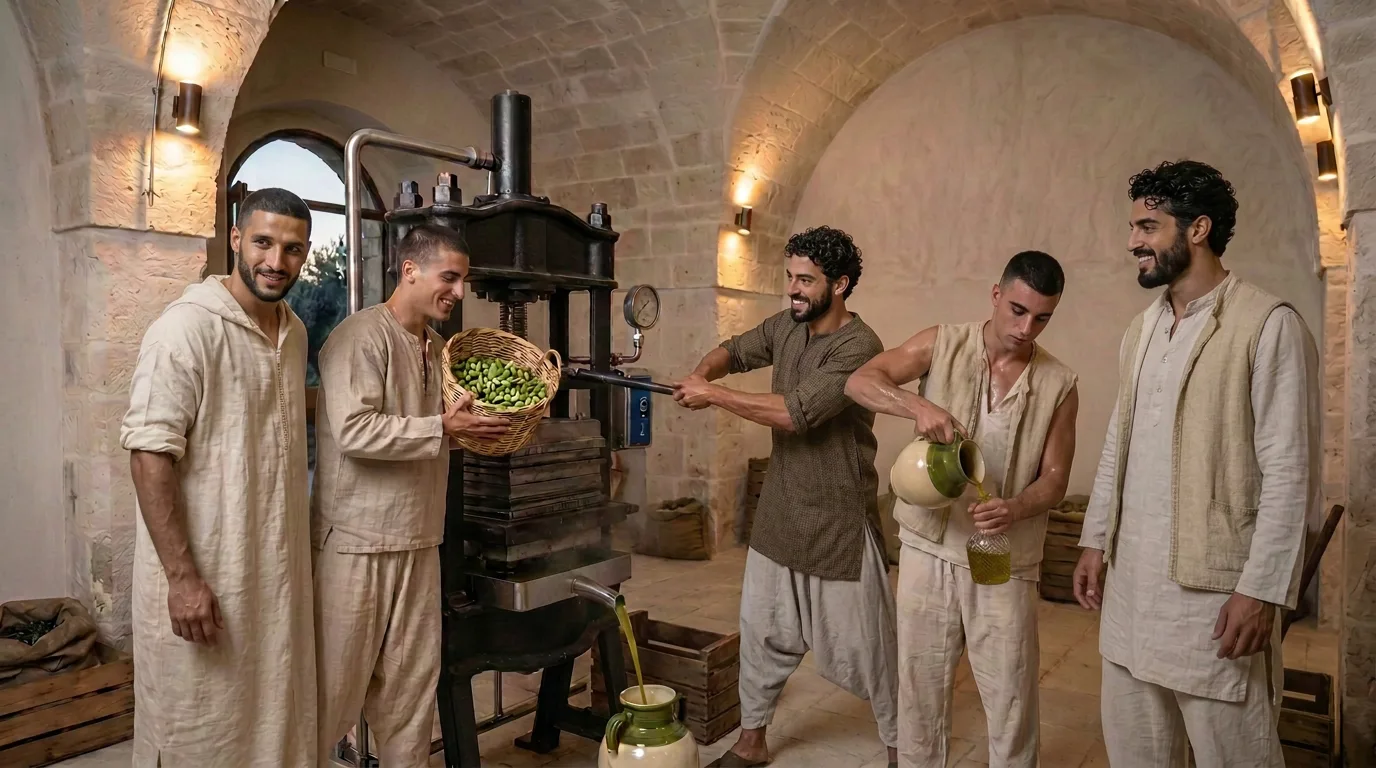
The crops follow what the Iblei plateau allows without forcing: olive grove, arable land, a vegetable garden for the table, and pasture where the ground carries nothing else. The olive grove has a second function: its prunings feed, together with the workshop offcuts, the biomass boiler that covers the part of the heating demand the solar does not.

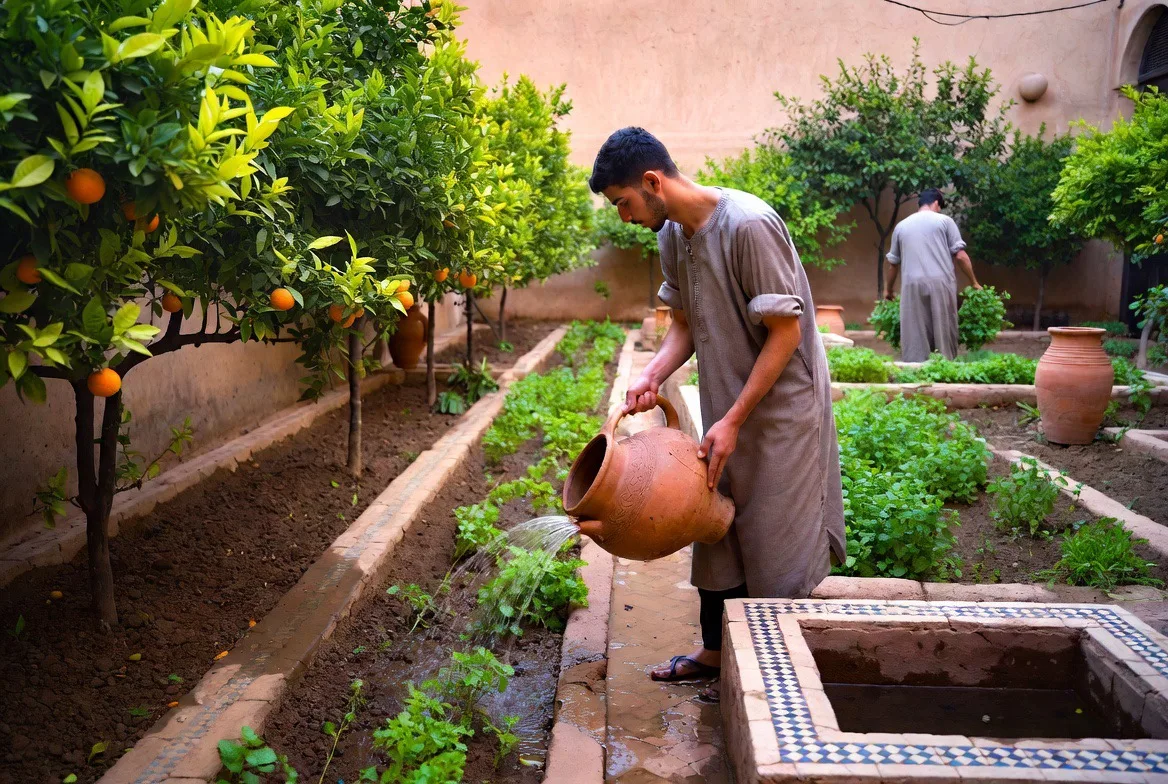
Agricultural production is sized for the house’s own consumption, and it is a deliberate choice. A farm that became the main source of income would shift the apprentices’ time from the workshop to the field, and the school of the crafts would become the farm’s side activity instead of the reverse. The road of certification is not taken either: the DOP is a control system that asks for the commitment of a business and not of a school. Good oil is sold without a label.
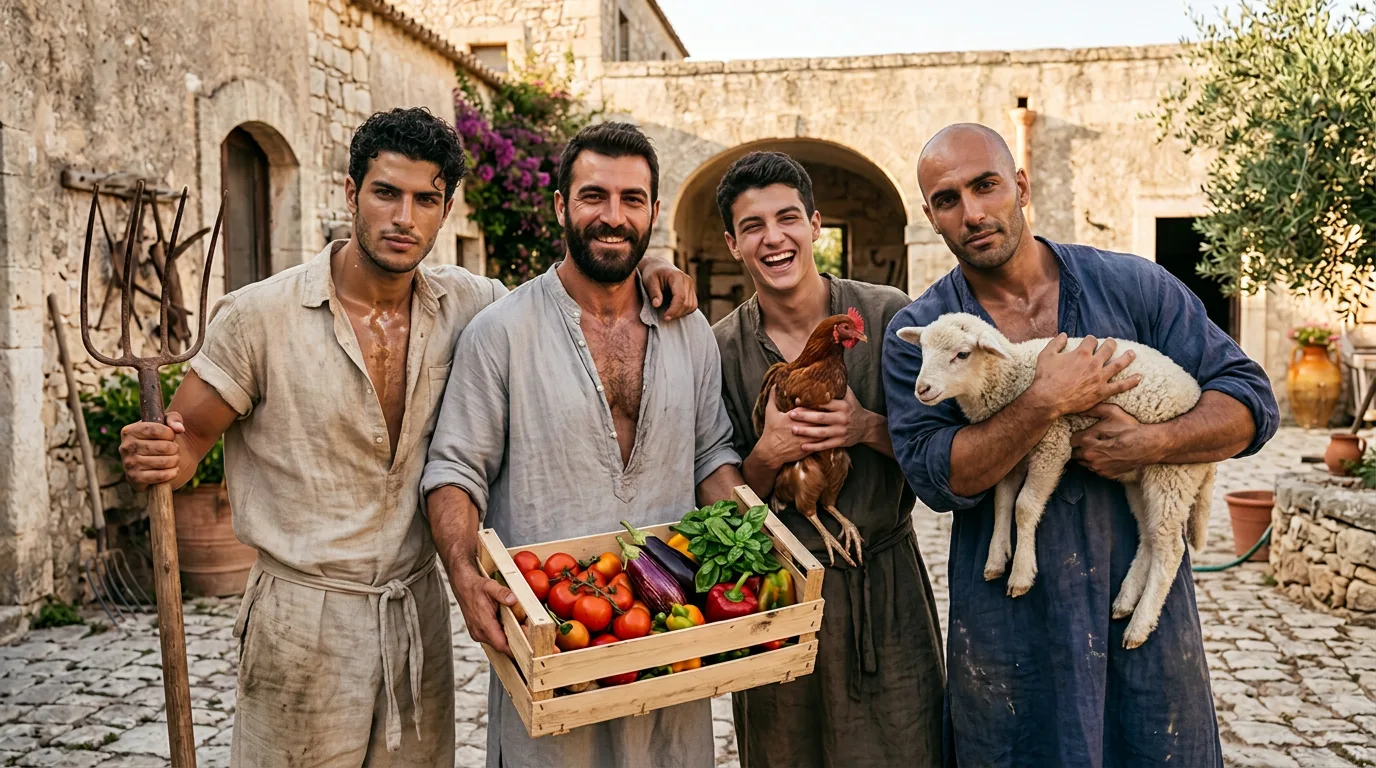
What the twenty-three hectares give to the table. Studio rendering.
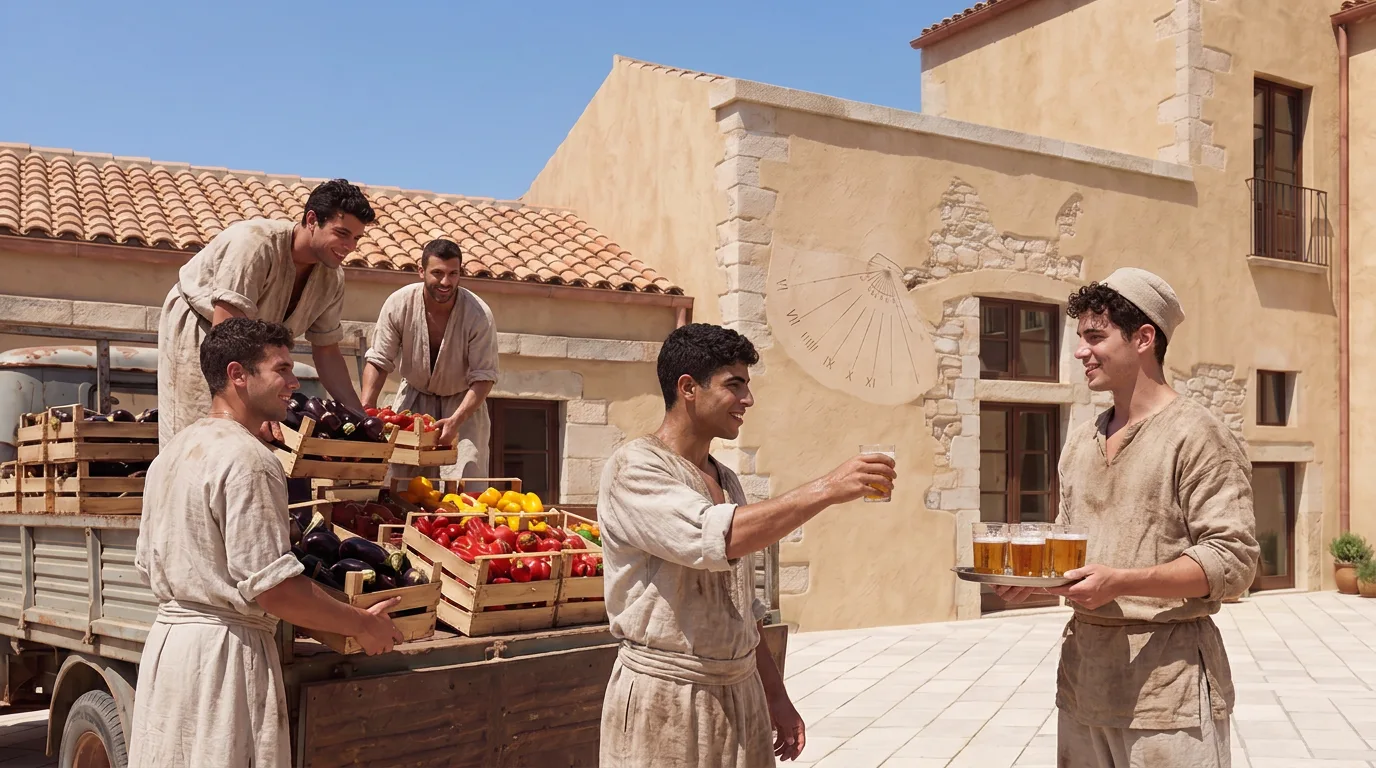
The surplus is sold, and the proceeds go to the House. The cooperative operates like any other Italian agricultural cooperative, with the licences and permits the case requires.
Water for the fields
Irrigation rests on the collection of rainwater, on the existing cisterns to be recovered, on new underground cisterns beneath the courtyard, and on the well whose yield and licence are to be ascertained. Waste water is treated by constructed wetlands sized for forty population equivalents, since there is no public sewer and the twenty-three hectares allow it without difficulty.