COMMON LIFE
The body and the day
Riding, archery, swimming, calisthenics and contact sports, hammam. The repertoire is the classic one of the horseman’s education, and part of it is also craft.
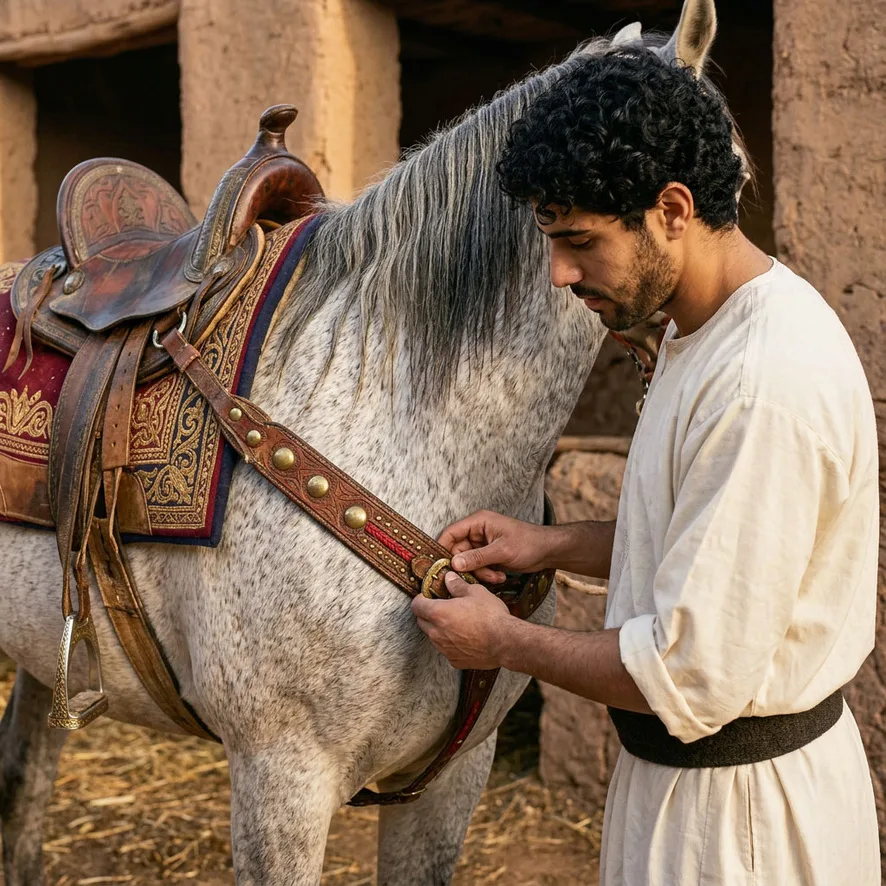
The house keeps two or three horses, a riding ring, a gymnasium, a pool and a hammam. They have a timetable resolved by the majlis, the assembly of the rifāq, like the shifts and the table: they belong to the day, and not to the list of amenities. Whoever lives in the house takes part; whoever does not want to, does not.
The horse, and the saddle
Riding is the only one of the four exercises that is also craft. An apprentice saddler who rides understands the object he builds: where the tree presses, how the leather works under load, why a buckle goes in one place and not another. A saddler who has never ridden builds objects that are correct and inert.
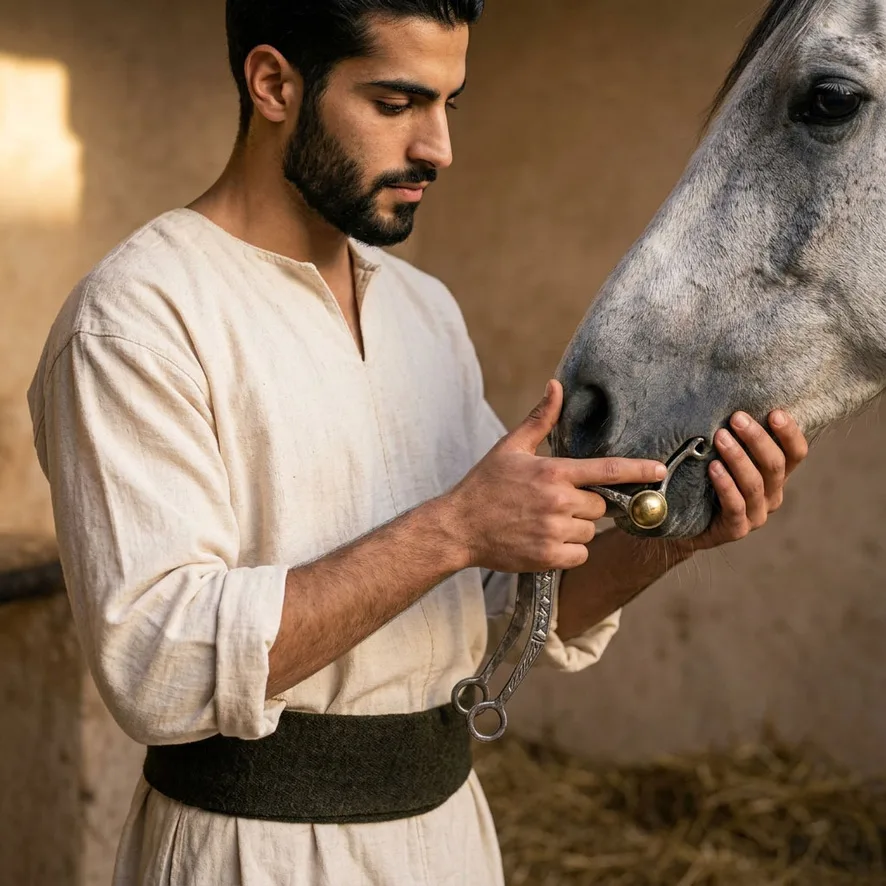
The twenty-three hectares carry stables and paddocks without forcing, in a farm building separate from the courtyard: flies, manure and dust do not sit fifty metres from the kitchen and the leather bench. The riding ring is run by a qualified instructor, with insurance cover and medical examination like any sporting activity.
Archery, swimming, the body
Archery and swimming belong to the classic repertoire of furūsiyya, the horseman’s education: riding, archery, swimming, endurance, and the adab that goes with them. Here they are what they are: sporting disciplines, with federations, instructors and known rules. Calisthenics and contact sports complete the physical part of the day, with a federation coach and competitive medical examination.
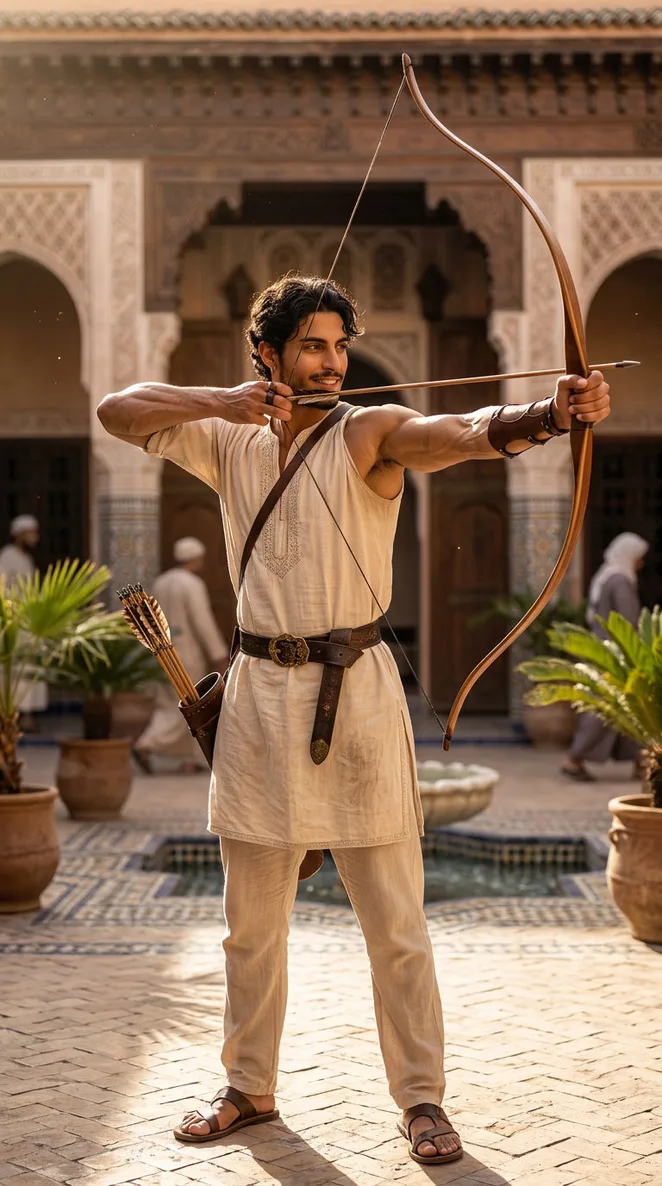
Archery. Studio rendering.
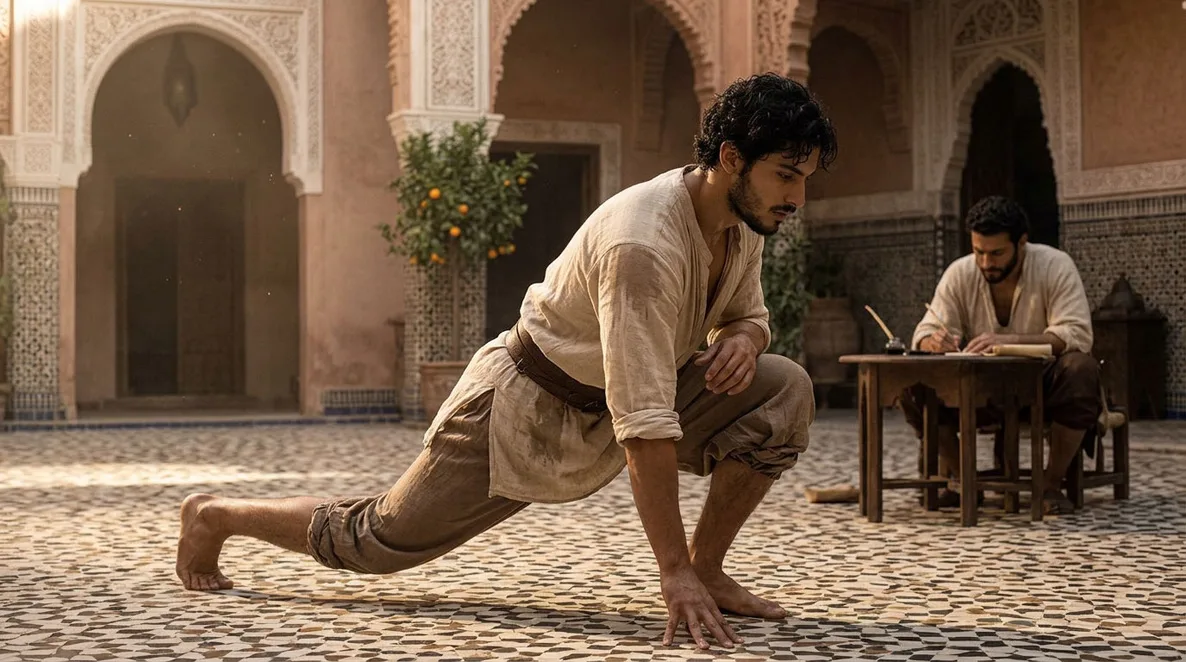
Calisthenics in the courtyard, while beside it work goes on. Studio rendering.
What the house does not do is as important as what it does. No weapons training. No degrees of brotherhood, no oath, no initiation. The only passage the house recognises is that of the craft, from ṣāniʿ to muʿallim, which is decided at the bench on the piece and not in a rite, and is described on the page on the passage. The futuwwa the house adopts is a workshop code — loyalty among companions, obligation towards those who have less, self-mastery, duties running both ways between master and apprentice — and it belongs to the rules, not to a rite.
The hammam, and the circuit of the outfit
The hammam stands in the existing spaces, together with changing rooms, gymnasium, laundry and wardrobe. The sequence is that of the work: one leaves the workshop, passes through the changing rooms, leaves the dirty garment at the wardrobe, takes up the clean one. It is the way the house can supply the outfit to everyone and keep it up without anyone washing in his room. How it is made and how it works is on the page on the hammam.
Activities involving physical contact and the hammam take place in the presence of at least two appointed persons, according to the timetable of the house, and never on an individual basis or by private arrangement. The staff hold the technical qualifications required and have passed the checks the law prescribes.
These last lines are not a formality. In a residential establishment of young men only, the contact protocols and the double presence are what protect the young men and those who work with them alike, and they are the first thing anyone entitled to inspect would come to check.
The matches with the local boys
At regular intervals the house opens its grounds to the young people of the district for a football match or another sporting contest. It is not an entertainment initiative and there is nothing promotional about it: it is the most direct way in which a community that lives inside an enclosure of its own makes itself known to those who live around it, and in which its members in turn get to know the territory in which they will work.
The reason is the same one that carries the whole project. What corrodes a distinct community is isolation more than difference, and isolation is broken on a pitch before it is broken at a conference. Whoever has played against someone knows his name, and a house whose members are known by name in the neighbouring villages is protected from a kind of suspicion that no institutional communication could dispel.
The matches are held on the threshing floor and on the fields of the property, with the same insurance and health guarantees as every other sporting activity of the house, and they appear in the calendar of the public programme together with the exhibitions and the concerts.
The day and the rule·Nizam ad-dar, the rules·Saddlery·The common spaces·The public programme