CLIMATE
Air, water and shade
The house will have no mechanical air conditioning in its living and working rooms. Not on principle, but because on the Iblei plateau the four old devices suffice, provided they are sized on the real figures instead of on an image of the East.
WHAT IS MEANT
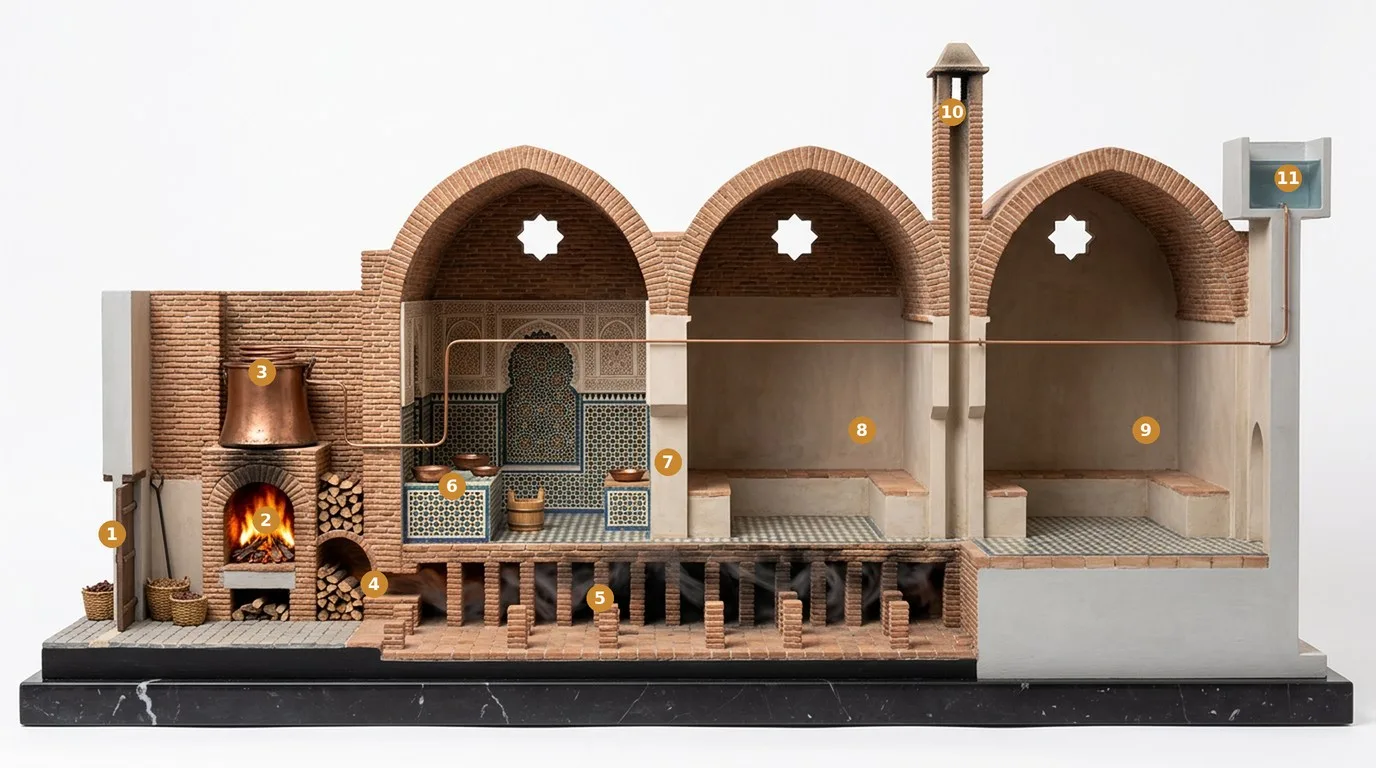
The absence of fans and extractors concerns the cooling and heating devices, which are the Arab-Andalusian ones described in these pages and work by difference of temperature and pressure. Three things remain mechanical, and have nothing to do with the climate of the rooms: the extraction of the kitchen and of the workshop, which are hygiene and safety requirements; the fan of the buried duct, if the scirocco gallery is built; and, for the hammam, an extraction to be assessed at design stage, since the draught of the flue may suffice.
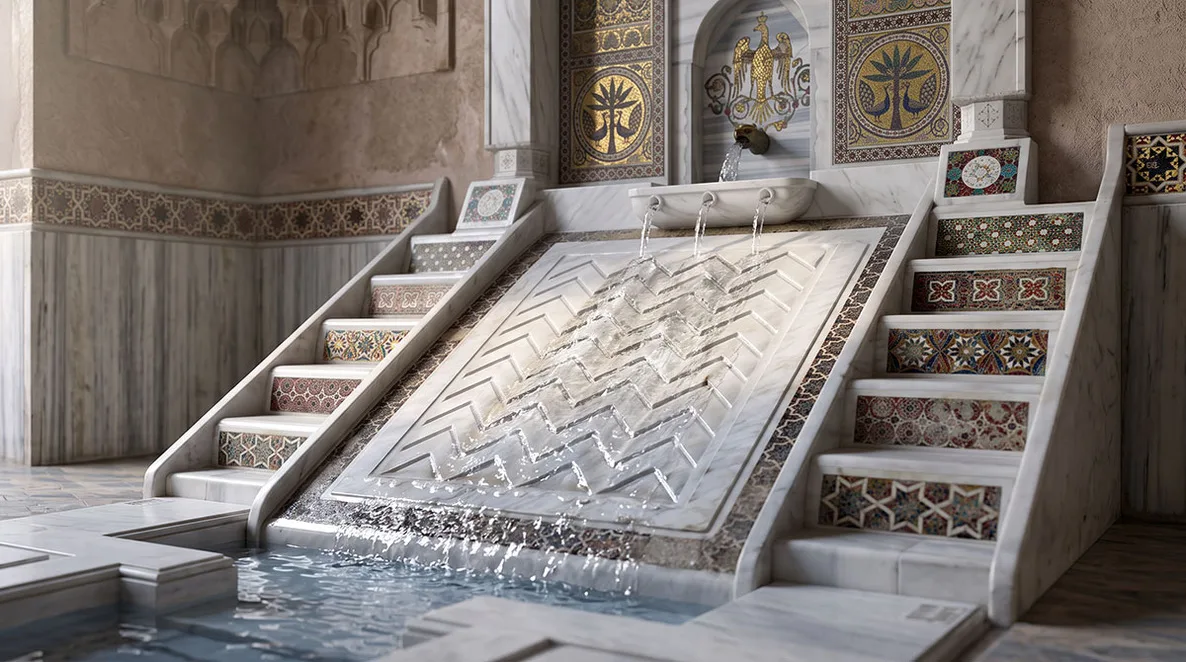
The figures of the place, before everything else
On the Iblei plateau the summer averages settle around twenty-nine or thirty degrees maximum and twenty or twenty-one minimum, with a daily range of about nine degrees and relative humidity between fifty-five and sixty per cent. It is a different regime from the continental one of Fez, where the range exceeds seventeen degrees and the summer air is far drier.
The difference has a precise design consequence, and it is worth stating at once because it is the mistake almost every project that appeals to Mediterranean architecture falls into. In Fez the strategy is to charge the mass of the walls with the cold of the night and to cross the day on the accumulated reserve; here the night is not cold enough for night ventilation to be the main engine of cooling. Here the mass works well for another reason: the daytime peak to be damped is modest, and thirty degrees damped and shifted by a few hours become an acceptable indoor temperature without any input of energy.
Night ventilation remains useful and must be designed, as a supplement. The other three levers — shade, moving water and contact with the deep ground — carry more weight here than in Fez.
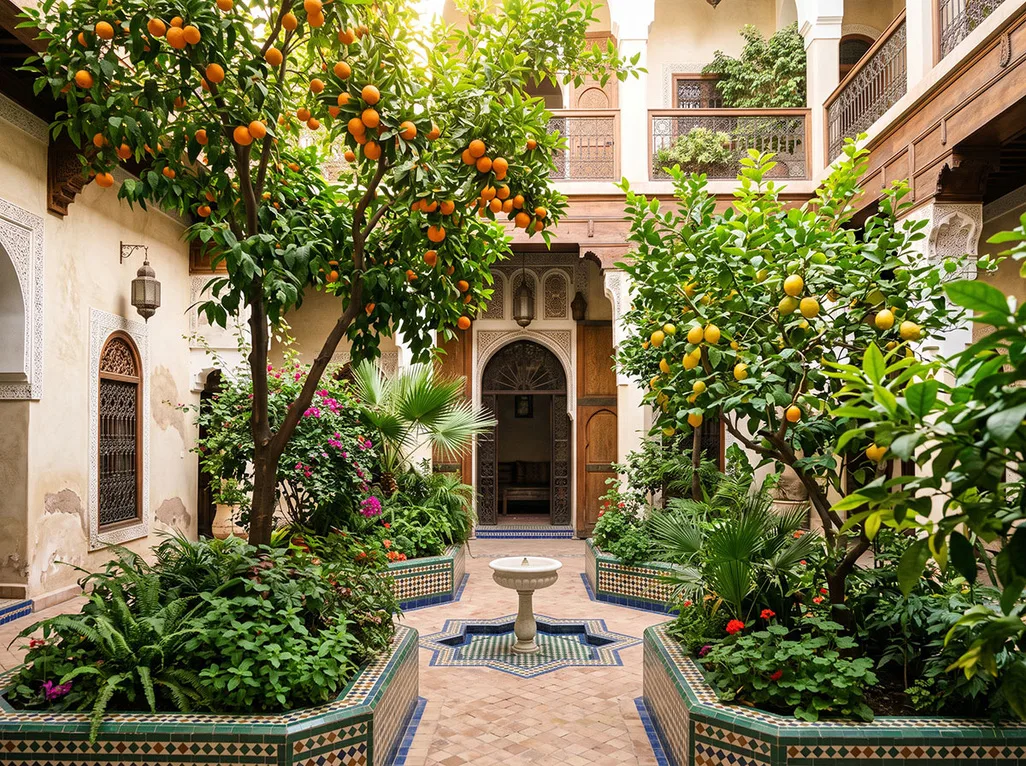
Mass and shade
Why the proportion of the courtyard decides before the materials, and what happens when the courtyard is wider than it is high.
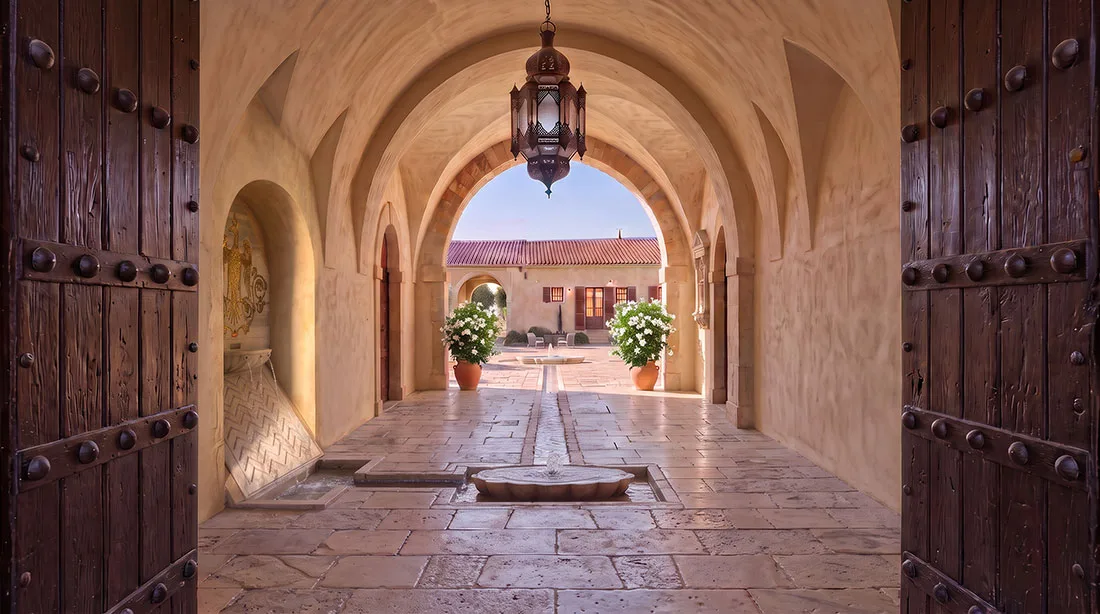
Water
Fisqiya, salsabil, channels and cisterns: water as a climatic device before an ornament, and the Sicilian lexicon that names it.
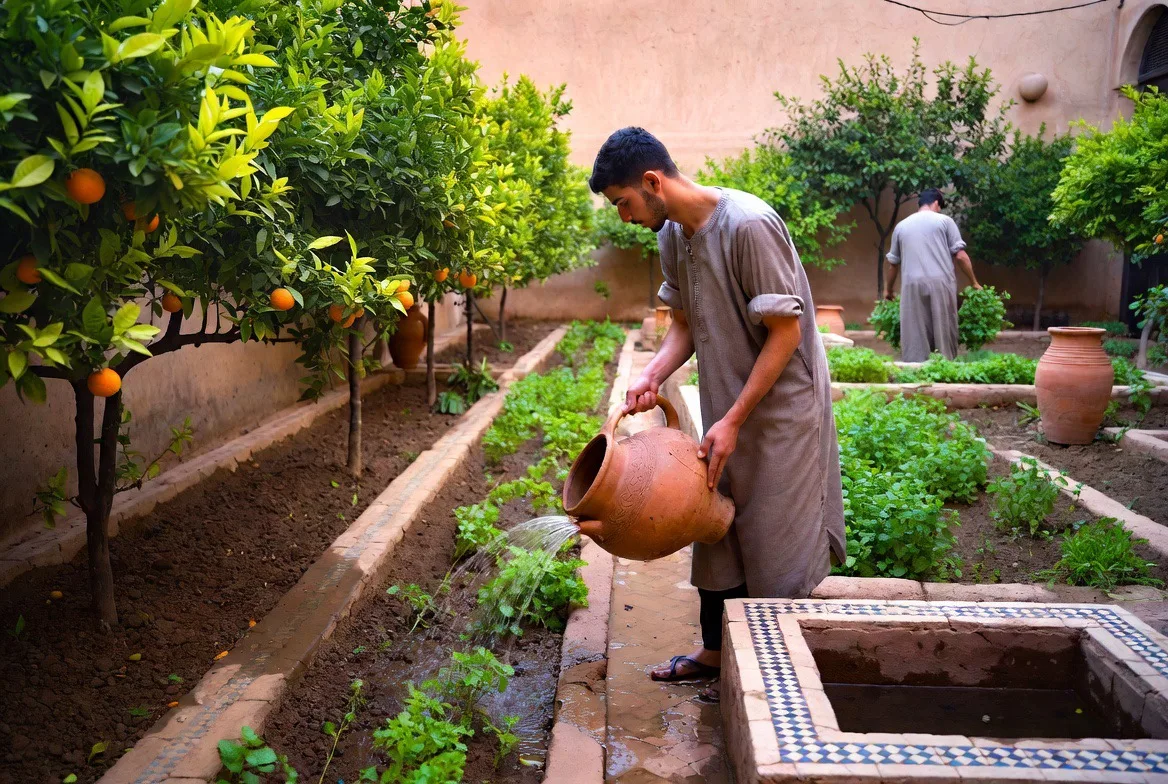
The cool of the ground
The buried duct from the north garden, and what the qanats and the Sicilian scirocco chambers really teach.
Heat, light, energy
Solar thermal before photovoltaic, biomass from the prunings, and a ground-mounted array out of sight instead of on the roofs.
The four interventions on the envelope
Before any device, the restoration repairs four things that today work against the building.
- — The cement plasters. Six thousand square metres of plaster must be removed and redone in lime. The grey band applied in past decades is the main cause of rising damp, because it prevents the masonry from giving up the moisture it absorbs.
- — The underfloor void. Seven hundred square metres of floor levels lowered with a ventilated void: it recovers headroom and interrupts the rise of damp from the ground.
- — The roof. Two thousand two hundred square metres of covering to be remade, with insulation laid at the same time. It is the surface that receives more sun than any other.
- — The rooflights. Sixteen in-plane rooflights, openable and motorised, for light, ventilation and night draught in the dormitories.
None of these four is evocative, and all four weigh on summer comfort more than any fountain. The fountains have their reason, which is discussed on the page about water, but they come afterwards.
NOTE ON SOURCES
The climate data are the 1991-2020 normals for Ragusa, compared with the 1991-2020 normals for Fez. The quantities of the works come from the outline estimate drawn up on estimated surfaces: they are to be replaced by the bill of quantities of the engineer engaged, which is the object of the current phase. On a listed building never surveyed the expected deviation is of the order of thirty per cent.