THE INSTITUTION
What the Funduq is
A house of the crafts: resident masters who train apprentices in the daily practice of the workshop, under rules of work and conduct accepted at the moment of admission.
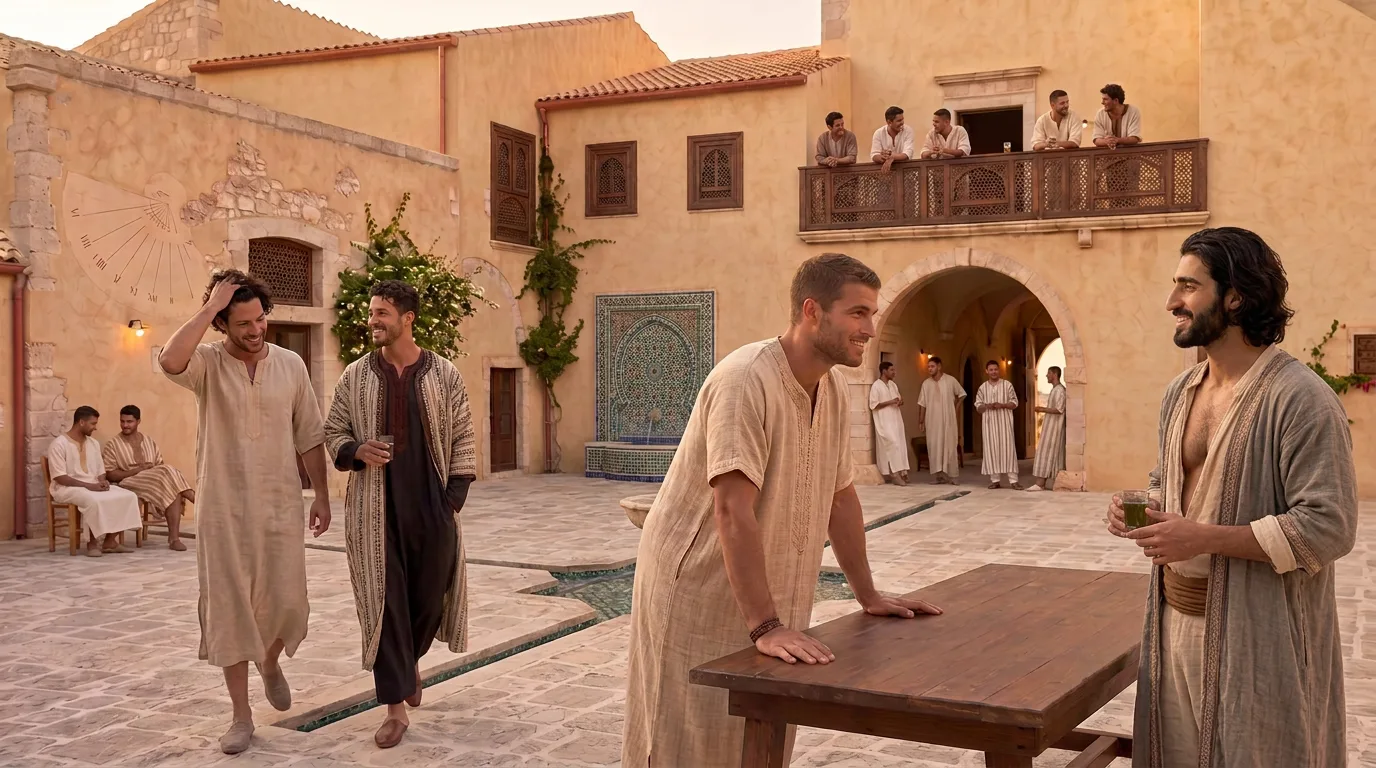
What distinguishes this house from a vocational school or an artists’ residence lies in the way its rules acquire their force. The internal rules differ from those of the surroundings not because a public authority has granted an exemption over a territory, but because the members have accepted them by contract on joining. No exemption is asked of any administration, and there is therefore nothing that a later administration could revoke. The ordinary permits — building, health, water abstraction — are applied for and obtained as anyone applies for them, and they do not touch the way the internal rules acquire their force.
The historical model is the funduq, which the Venetians called fontego: a house kept by a community in a city not its own, with an internal discipline, the settlement of disputes among its own members and a place of worship of its own. The institution worked reciprocally between two civilisations for about four centuries, and as long as it worked in both directions it worked well.
The size, and why it stays small
At full strength, six masters and eighteen to twenty-four apprentices make up a number that can be governed by people who know one another, which is the only form of government that has ever succeeded at the first attempt. The first intake is smaller still: twelve young men, two masters and three staff. The house stays small by choice, and when it grows it is not the number of residents that grows but the number of houses.
The disciplines provided for in the design are six: calligraphy and the book, zellij, plaster and muqarnas, weaving and brocade, wood and carving, saddlery in the combined working of leather, wood and metal. The opening takes place with a single workshop, saddlery of the highest standard; calligraphy and the book, which also covers the bookbinding tied to the tooling of leather, is the second, and the other disciplines follow when the masters and the commissions really exist.
- — Admission by individual application, never by category of belonging. Whoever is admitted becomes a rafīq, a companion.
- — No residence requirement imposed on any rafīq.
- — Free withdrawal, without penalty or payment, with one’s own tools and whatever has accrued.
- — Reciprocity: the statutes and the rules are available, on the same terms, to any community that intends to found a similar house.
What it is not
The association is not a religious body, does not conduct worship, is not the expression of any confession or religious authority and does not proselytise. The religious affiliation of the rifāq is their own affair; the house makes a space available for the prayer of those who wish it, and neither attendance nor abstention has any bearing on admission, on membership rights, on the assessment of the work or on continued residence. The wording also has a practical reason, since a religious body falls under a regime of its own and the ambiguity would make registration in the national register of the Third Sector uncertain.
Nor is it a welfare scheme. The members bring their own craft, their own masters and, where they have them, their own means; the house is founded by the community that lives in it, and selection at the entrance is strict. Once admitted, hours, table, lodging and common services are the same for everyone, and no outward distinction of treatment is allowed on account of anyone’s economic or family circumstances.
Nor, finally, is it a cultural centre that hosts artisans. The production is fine craftsmanship made to commission, in single pieces or short series, for architecture and interior practices, restoration sites, institutions, collectors and art publishers. The house does not produce catalogue objects and does not sell to the casual visitor, for an arithmetical reason before an aesthetic one: work sold at retail margins does not sustain properly paid masters, and a workshop that begins to make small objects for sale stops being a school within two years.
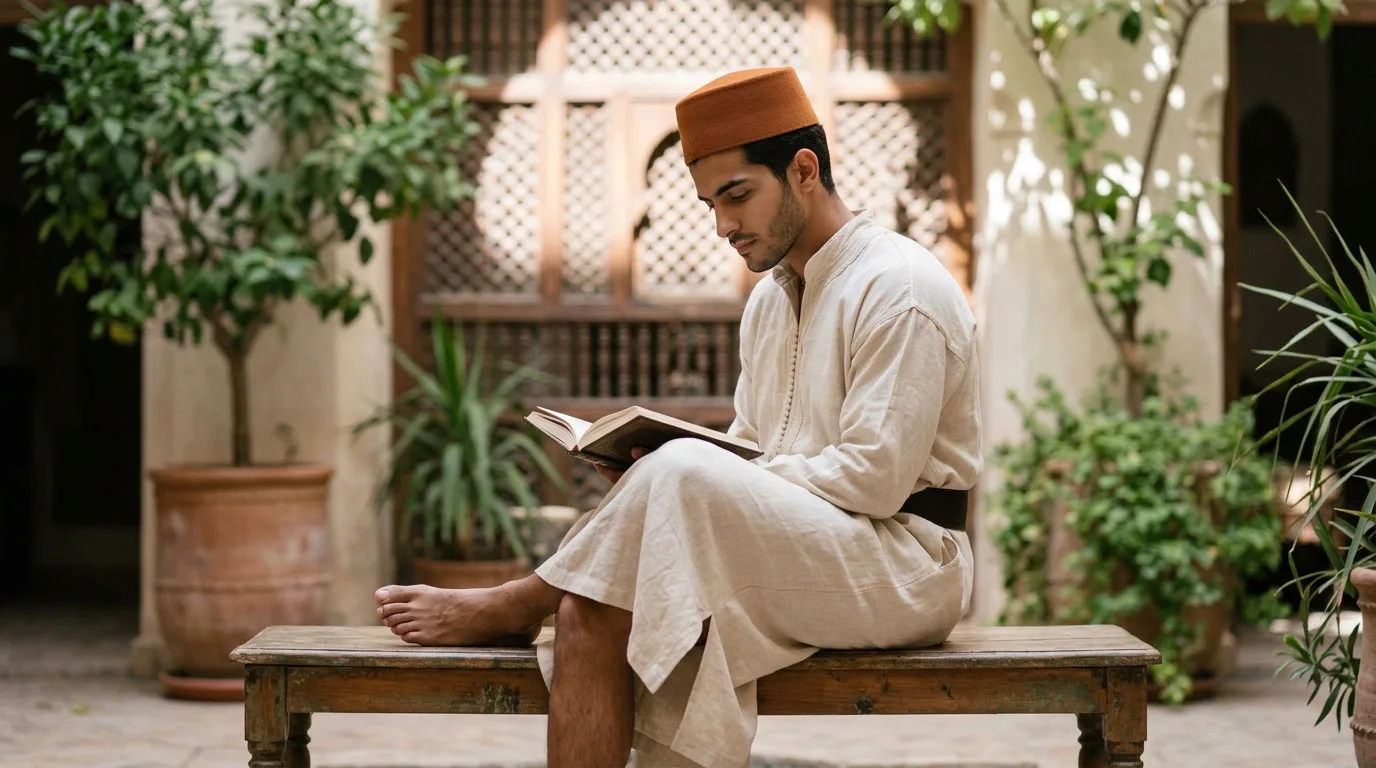
Rules by contract
Why a contract holds where an administrative concession gives way, and what one gives up obtaining by this route.
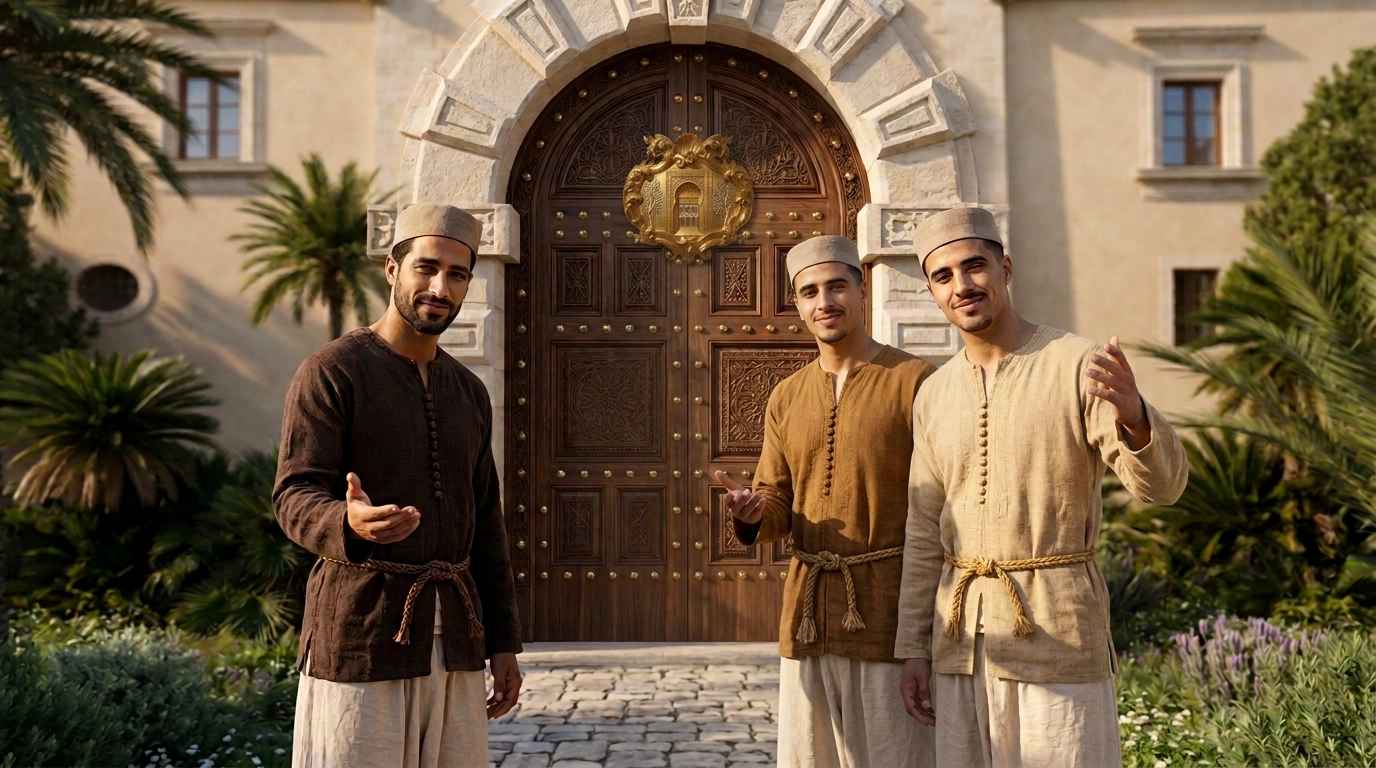
The safeguards
The clauses that prevent the house from becoming what the fondaco became when it stopped being reciprocal.
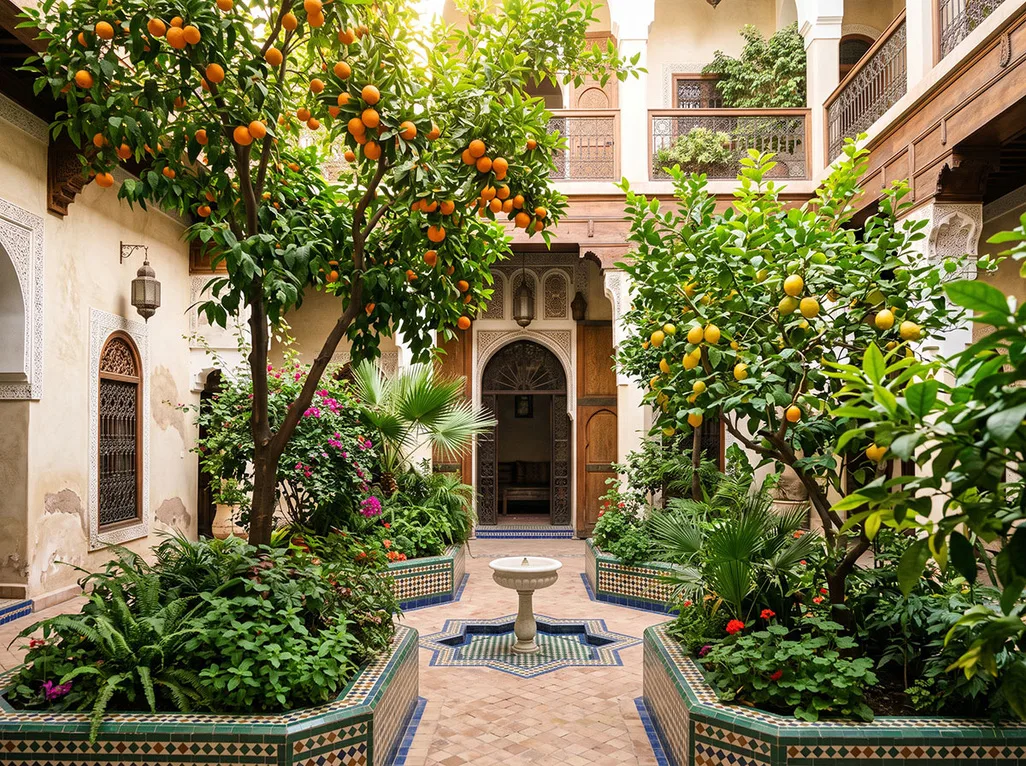
The legal framework
Association, arbitration among the members, and the limits declared before anyone asks for them.
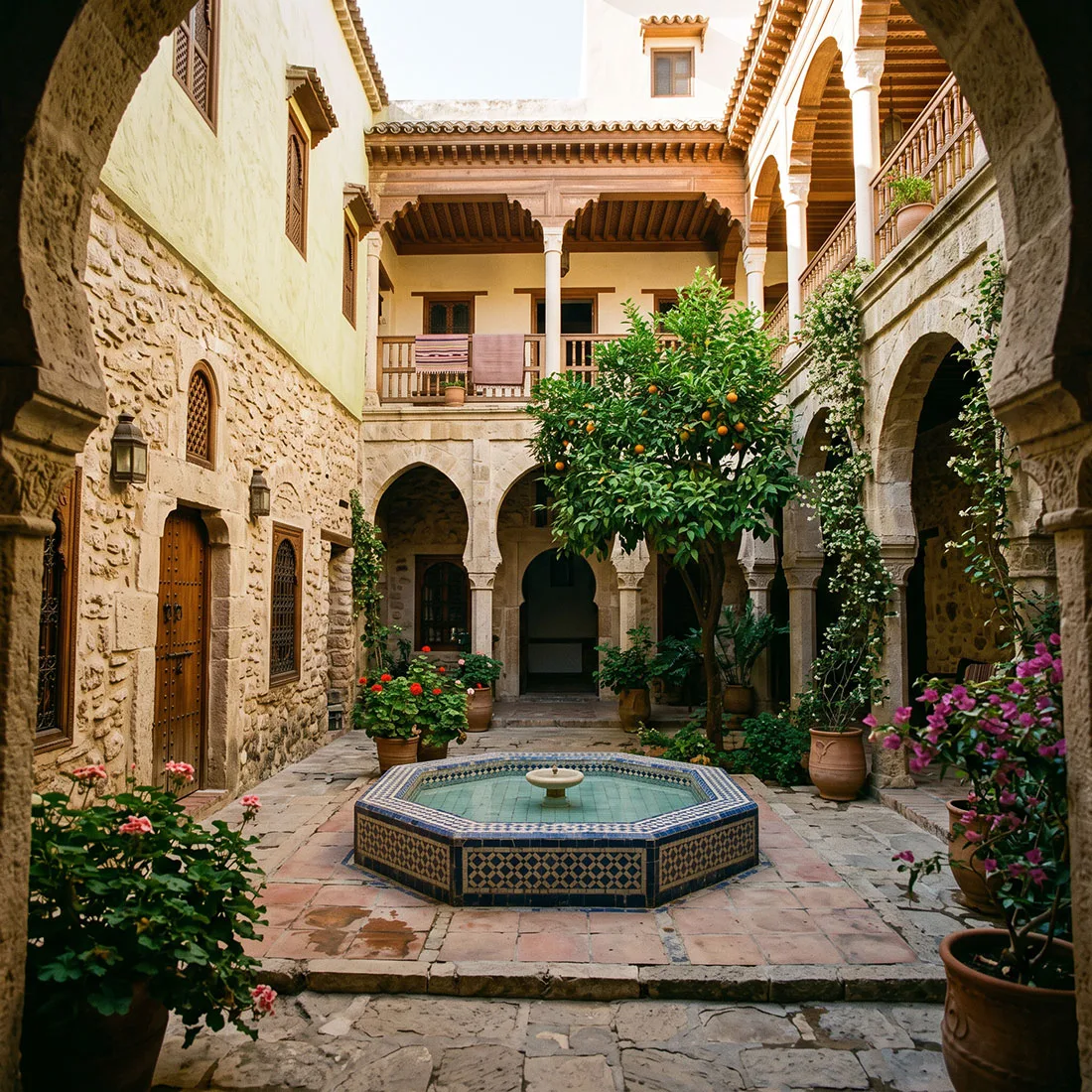
Four entities, one property
The House, the farm and the paying guesthouse: separate accounts and written relations.
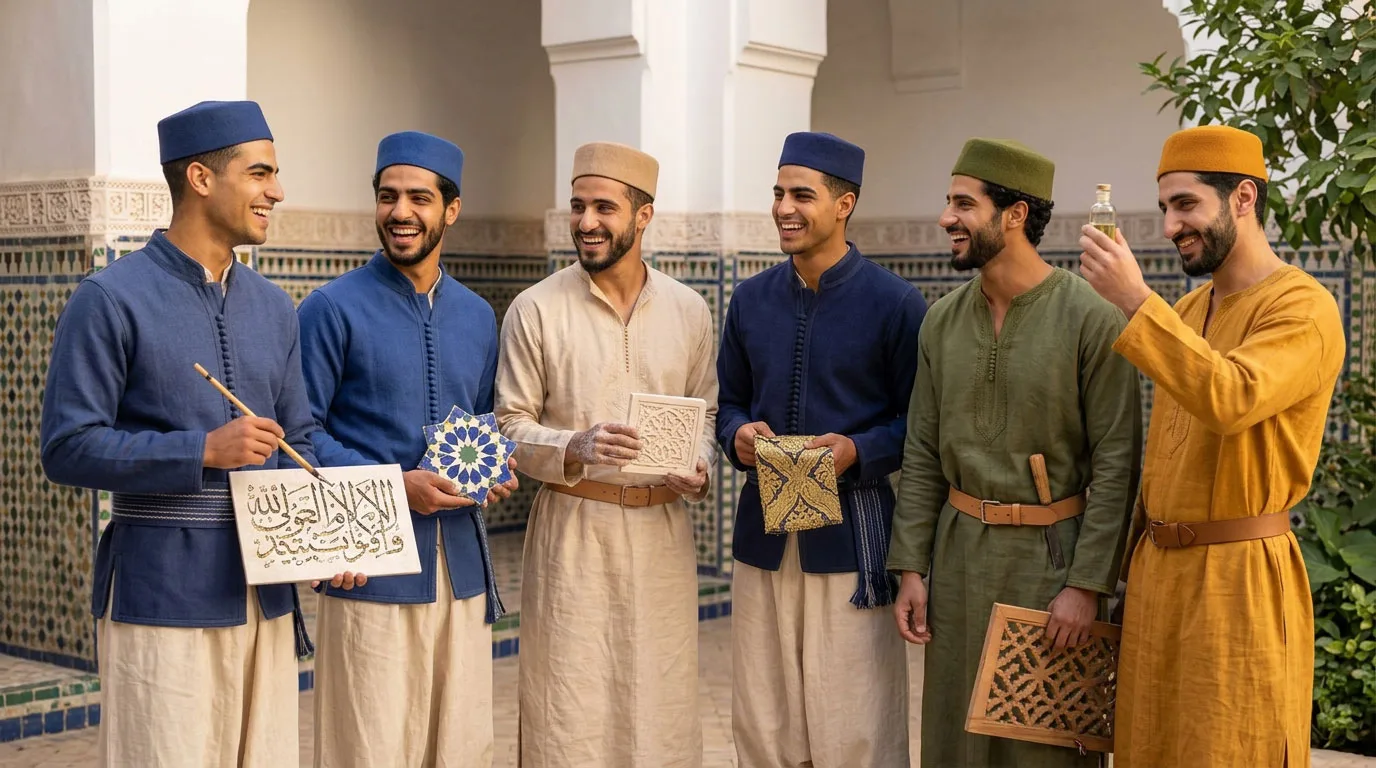
The government of the house
One vote each in the majlis, hierarchy only in the workshop, a niẓām revised by the rifāq.
The network of houses
Why the product is the statutes and not the building, and what sanction holds a federation together.