THE PRECEDENT
What a fondaco was
The Arabic funduq derives from the Greek pandokeion, the inn open to whoever arrives, and the Venetian fontego derives in turn from the Arabic. The word travelled because the institution travelled.
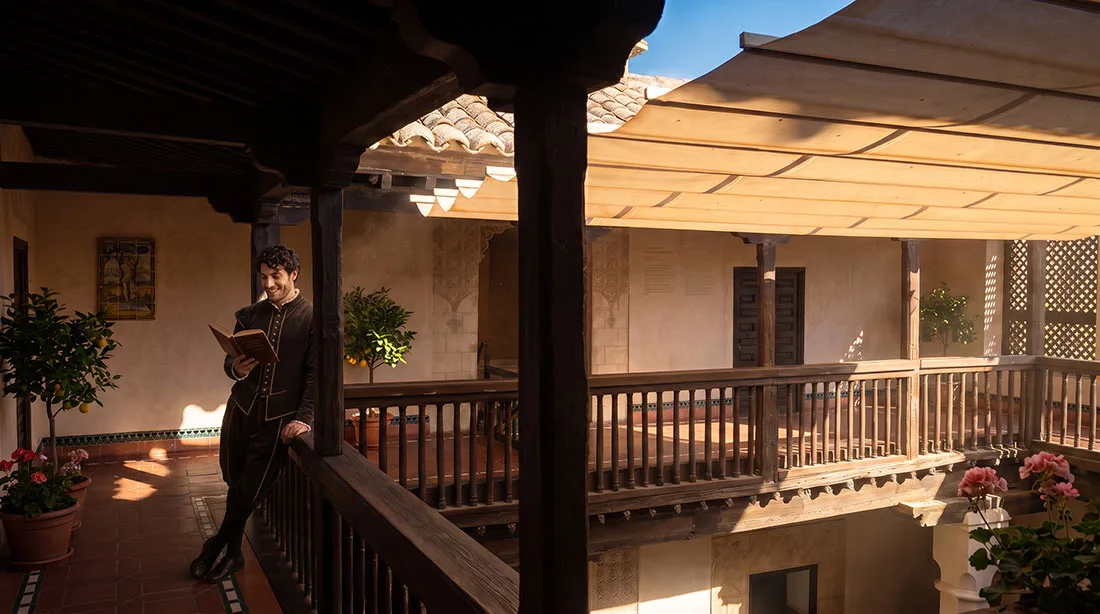
In the medieval and early modern Mediterranean a fondaco was a walled house, in a foreign city, where a community of merchants lodged, stored goods, prayed and settled its own disputes. The agreements were specific and set down in writing.
A Venetian fondaco in Alexandria had a consul appointed by Venice with authority over the merchants inside it, a chapel, a warehouse, ovens, and rules of conduct that the community itself enforced. Disputes between Venetians were decided by the consul according to Venetian usage; those between a Venetian and a local merchant went to the local authority. The line between the two jurisdictions was a matter of negotiation, and was fixed in the treaties.
The same institution existed in reverse. German merchants held the Fondaco dei Tedeschi on the Grand Canal from the thirteenth century, and Ottoman merchants the Fondaco dei Turchi from 1621. Venice regarded this less as a concession to foreigners than as the ordinary way of trading with people whose law was not its own.
The three features that recur wherever it worked
- 1. Membership was defined and voluntary. A merchant entered the community of his own nation, and the obligations followed from that act.
- 2. Jurisdiction was internal and limited. The consul governed relations among the members, not relations between the members and the city.
- 3. There was reciprocity. The agreement ran in both directions between the two civilisations, which meant that an abuse met with an answer elsewhere, in a house belonging to the other side.
Reciprocity is the part usually left out when the fondaco is described, and it is the part that did the work. It turned an arrangement that could have been one of containment into a mutual convenience, because each side held with it a pledge of its own good faith.

The Sicilian precedent
Ibn Hawqal, the Geniza letters, al-Idrisi and Ibn Jubayr: the institution in Sicily under Islam and after, and what cannot be claimed.
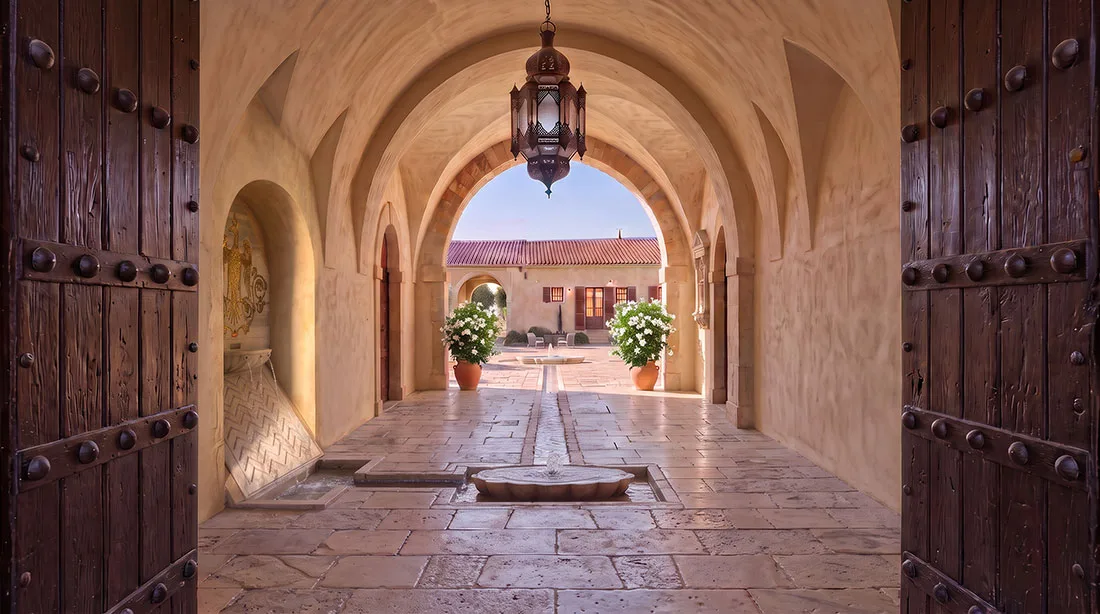
Spain, and a whole building
The Corral del Carbon in Granada and the Andalusian alhondigas: the only fondaco of al-Andalus to have come down to us whole.

Venice, and the drift
The Fondaco dei Tedeschi and the Fondaco dei Turchi, and the precise moment at which a common house becomes a guarded enclosure.
Why this precedent and not another
The fondaco interests this project not as an architectural type but as the solution to a problem of legal order. A community that lives in a place where the general law does not coincide with its own customs needs a way of regulating its internal relations without asking the host State to recognise it as a separate body. The fondaco solved that problem with two instruments only: voluntary membership and the internal settlement of disputes. Both still exist in European law in force, under other names.