الفندق الصقلي
Al-Funduq as-Siqilli
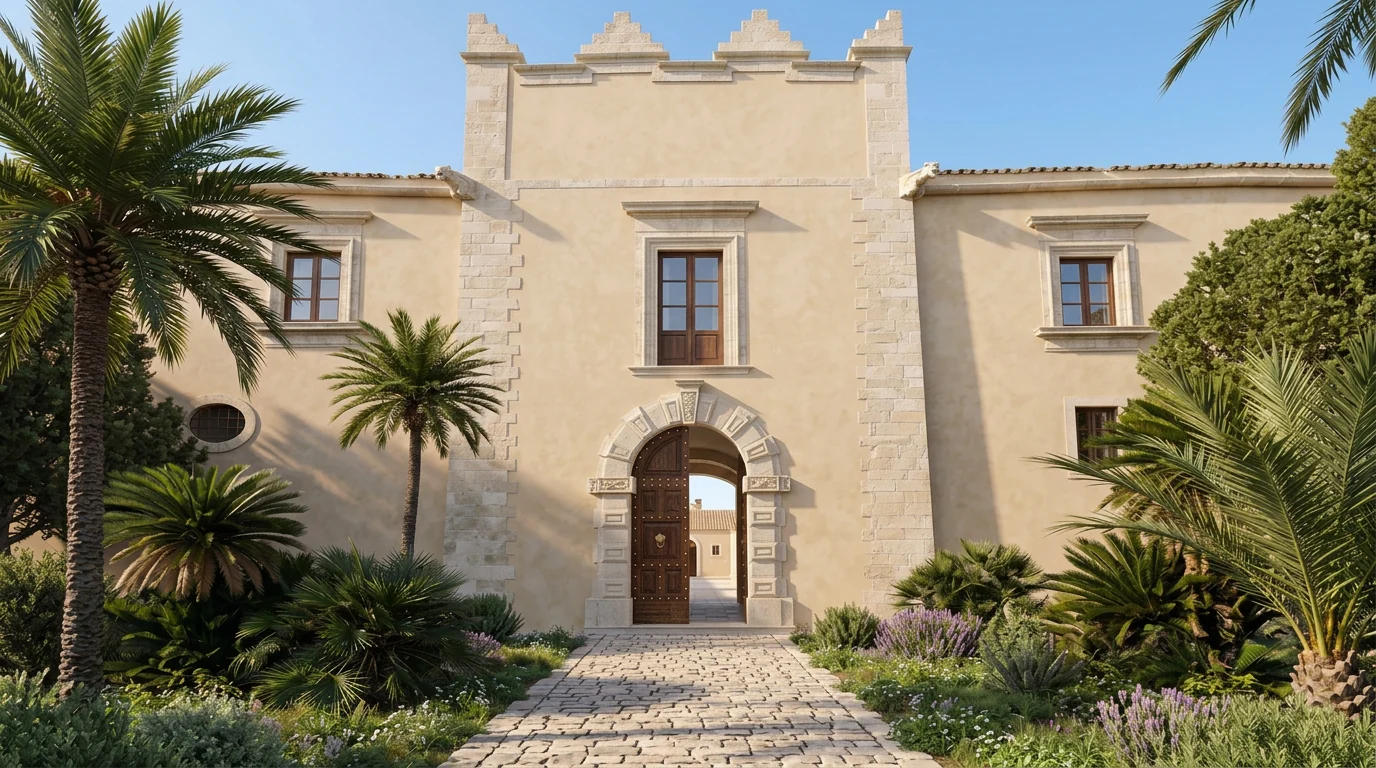
The Sicilian Fondaco — a house of the crafts governed by its members, in the province of Ragusa
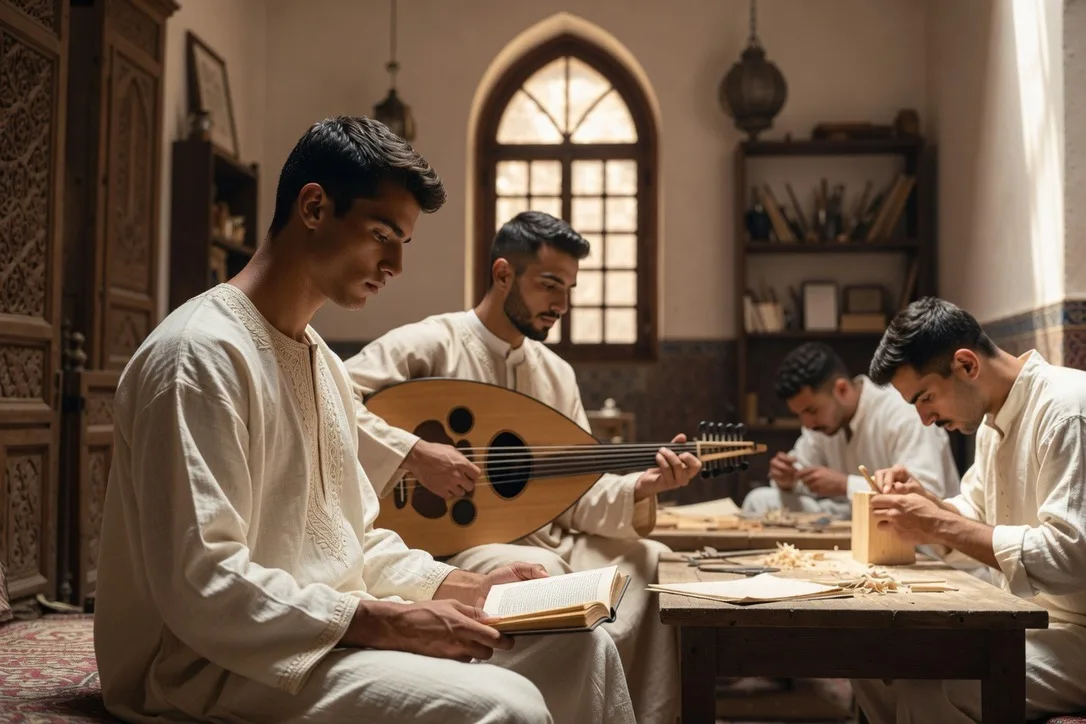
A residential school of the crafts, governed by its members according to rules they have given themselves. It takes from a Mediterranean institution of long standing the principle of a community with a discipline of its own, and places it in Sicily, where that institution has already existed.
THE NAME
Al-Funduq as-Siqilli
The name says which institution this is, and where.
The Arabic funduq comes from the Greek pandokeion, the inn that receives whoever arrives, and the Venetian fontego comes in turn from the Arabic: the word travelled because the thing travelled. In the medieval Mediterranean a fondaco was a walled house in a foreign city, where a community of merchants lodged, kept its goods, prayed and settled its own disputes according to its own rules.
As-Siqilli simply means «the Sicilian», and in Italian the name of the association is Il Fondaco Siciliano — Associazione per le arti e i mestieri. The institution is not being imported into the island: it has already existed in Sicily, it bore this name, and Sicilian dialect still keeps funnacu in the sense of an inn with stables.
What the project takes up is a principle of order before it is an architectural form, that is, a community which accepts by contract a discipline of its own, and which exercises that discipline only among its own members.
STATE OF THE PROJECT
A project, not yet a house
What these pages describe does not yet exist. The building has been identified and its owner is willing to sell, the legal texts are drafted, the masters have been identified but not yet engaged in writing. Nobody has yet lived under these rules, and nobody has yet tried to leave them.
The current phase serves to obtain contractual control of the property for eighteen months and to produce, within that term, the certified cost of the restoration, the legal entities duly constituted, the building application filed and the commitment of the first masters.
The conditions that would count as a negative verdict are fixed now, before anyone has an interest in the answer, and they are published.
مَا أَكَلَ أَحَدٌ طَعَامًا قَطُّ خَيْرًا مِنْ أَنْ يَأْكُلَ مِنْ عَمَلِ يَدِهِ
Mā akala aḥadun ṭaʿāman qaṭṭu khayran min an yaʾkula min ʿamali yadihi
«No one has ever eaten better food than that which comes from the work of his own hand.»
Al-Bukhari, Sahih, Kitab al-buyu’, no. 2072
Rules accepted by contract rather than granted by a State, and the safeguards that prevent the house from becoming an enclosure.
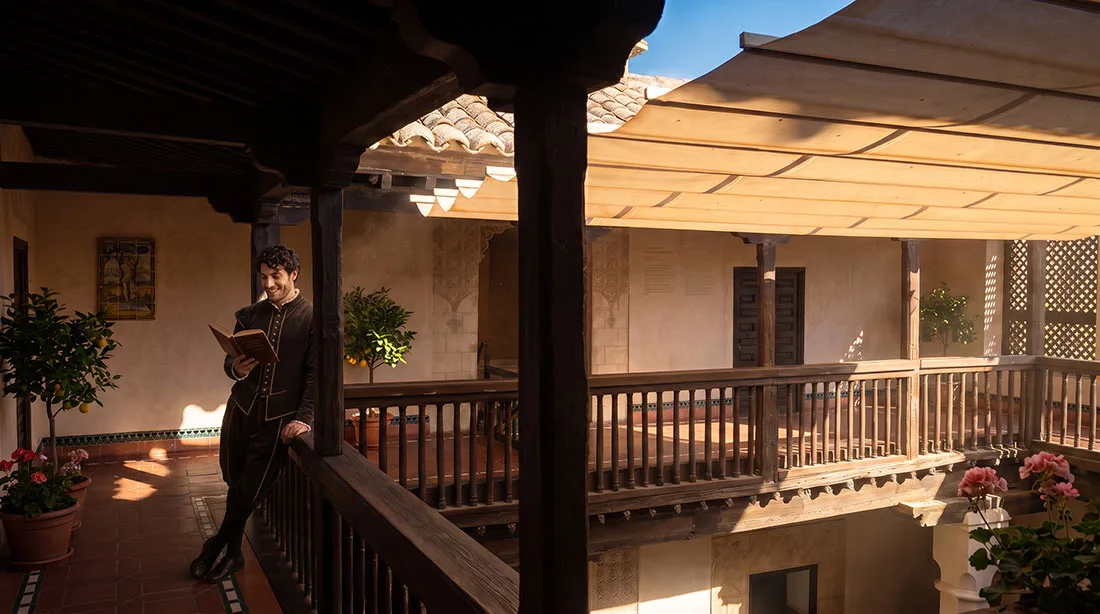
What it really was, in Sicily, in Spain and in Venice, for four centuries, and under what conditions it stopped working.
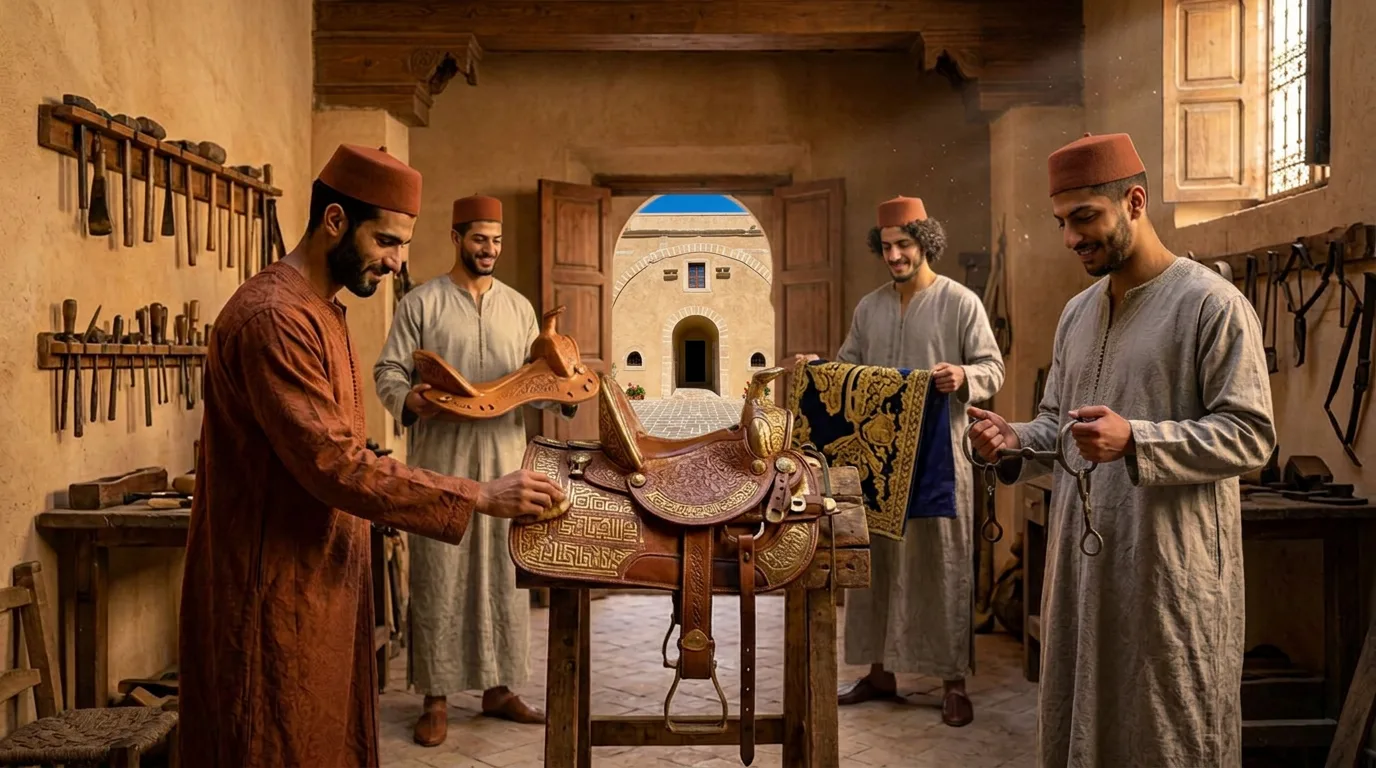
Six disciplines in the design, one workshop at the opening, and a single rule of production: fine craftsmanship made to commission.
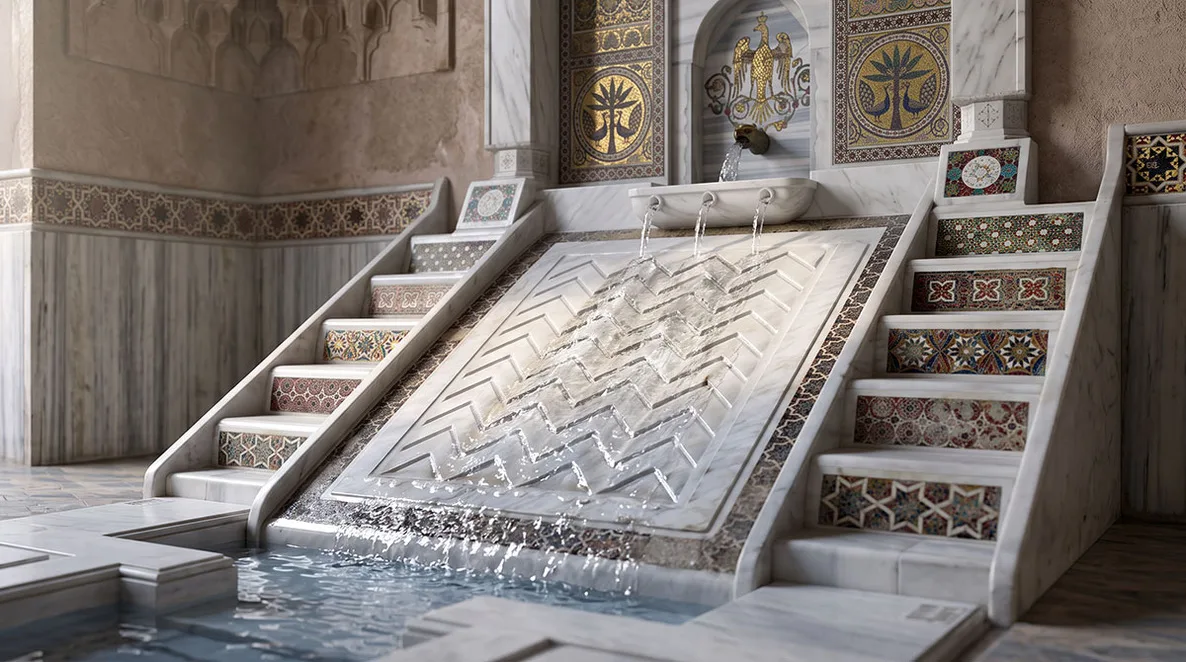
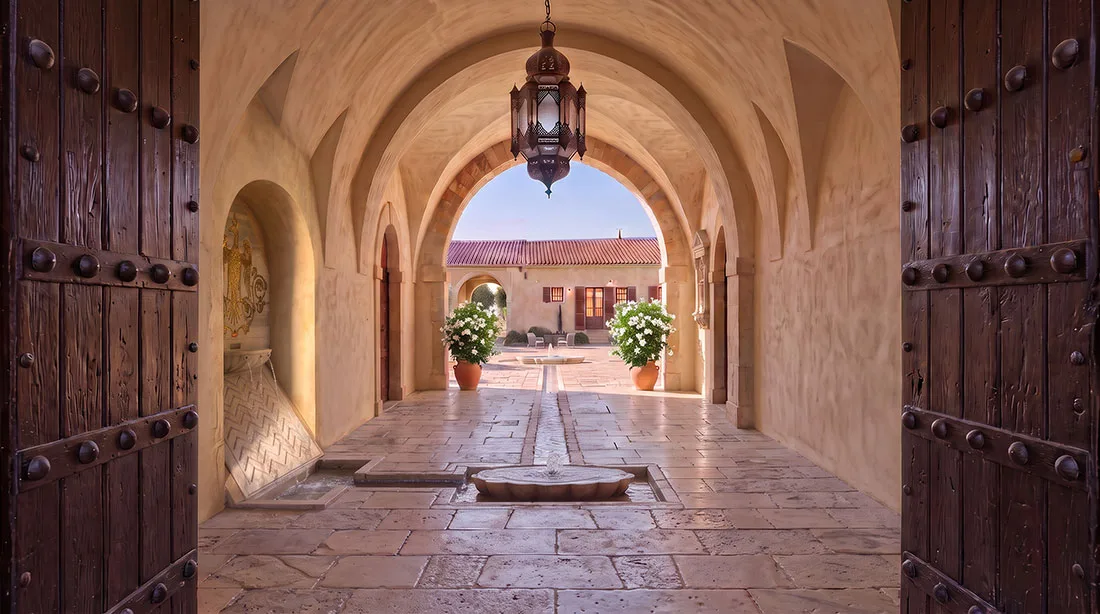
How to get through the summer of the Iblei without air conditioning: the mass of the walls, the shade of the courtyard, moving water, the cool of the ground.
The place·Common life·The public programme·Glossary
FOUR ENTITIES, ONE PROPERTY
The separation written before anyone arrives
The House is governed by its members, the land is worked by those who live there, the guesthouse belongs to others and pays a fixed sum, the supporters have an association of their own. Each is a distinct legal entity, and the separation between them is written into the statutes.
The association of the members: masters and apprentices admitted on application and by vote of the majlis, one vote each once they are members, hierarchy only in the work. It does not own the buildings outright.
Twenty-three hectares worked by a cooperative whose working members are the members of the House. It supplies the table and binds the apprentices to a season and a harvest.
The guesthouse, in a separate building with its own entrance, in a distinct vehicle with its own investors. It pays the House a fixed annual sum and never a percentage of its revenue.
The association of the supporters, who lodge at the Munya when they come. It collects contributions and assigns them to determined purposes, with no voice in the deliberations of the House.
WHY THIS PLACE
Both halves are already here
The masters come from Fez. The apprentices come from the North African population that has worked the agricultural belt of the province of Ragusa for three decades.
A school of the crafts whose masters and whose apprentices both had to be imported would be a museum. The place is not interchangeable precisely because both halves are already present, and have not yet met.
Who we are looking for →