THE CRAFTS
The workshop
Of the six disciplines in the design, only one is at work at the opening: fine saddlery, in the combined working of leather, metal and wood.
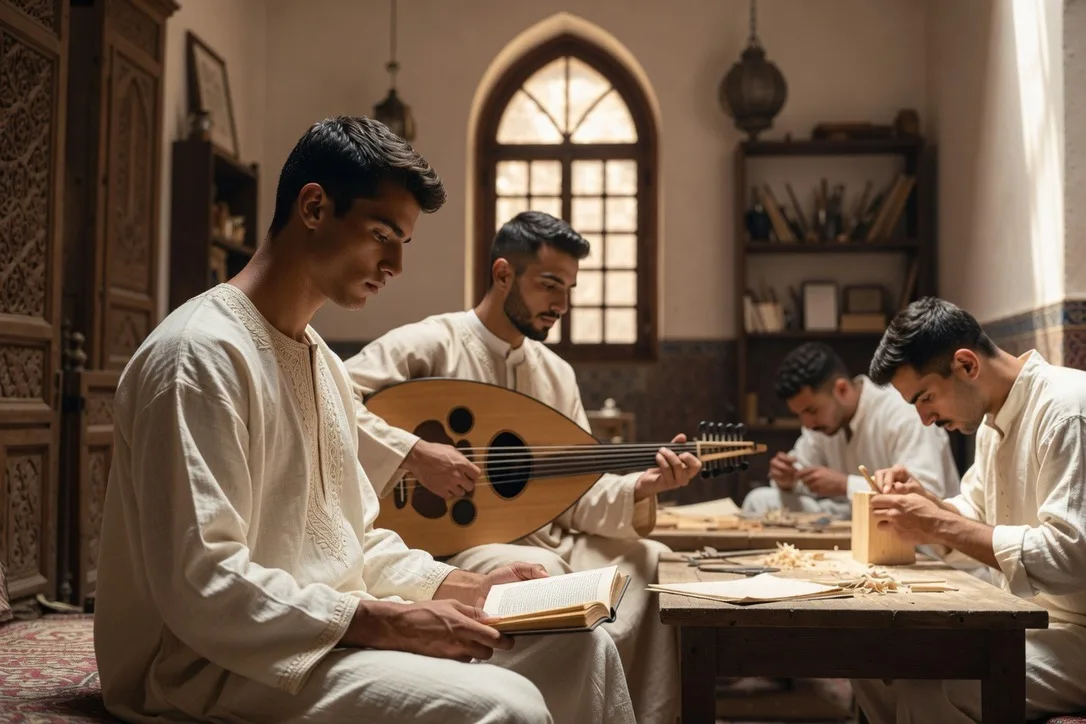
The house opens with a single workshop: fine saddlery, in the combined working of leather, metal and wood. Two masters — leather, including tooling with hot irons and gold leaf, and metals, with a forge in a room of its own — and eight apprentices at the bench.
Why only one
The choice is deliberate. A house that announced six disciplines before it had opened one would be saying of itself that it has never run a workshop. Fine saddlery is the only one of the crafts that holds three materials together in a single object, it has an identifiable market, and it joins up with the twenty-three hectares and with the horses: whoever builds a saddle rides it, and whoever visits understands without being told.
The second: calligraphy and the book
The second workshop extends the first rather than adding to it. Fine bookbinding shares with saddlery the hot irons, the gold leaf and the press: the master of leather teaches the binder half the trade, and the two kinds of work have the same clients. It opens when the first workshop sells and the house has learned to stand on its own.
The others
Zellij, plaster and muqarnas, weaving and brocade, wood and carving remain in the design of the institution and open by resolution of the majlis, when the masters, the work and the hands to keep them are there. The third master of saddlery — the wood of the saddle tree — comes before the others, when the workshop can carry him.
Each workshop has its sign, carved in wood and hung above the door: at the centre the tool that identifies it, on the ground the colour of the craft. It is the same series the house in Fez carries, and it is the most immediate way in which the two houses recognise each other.
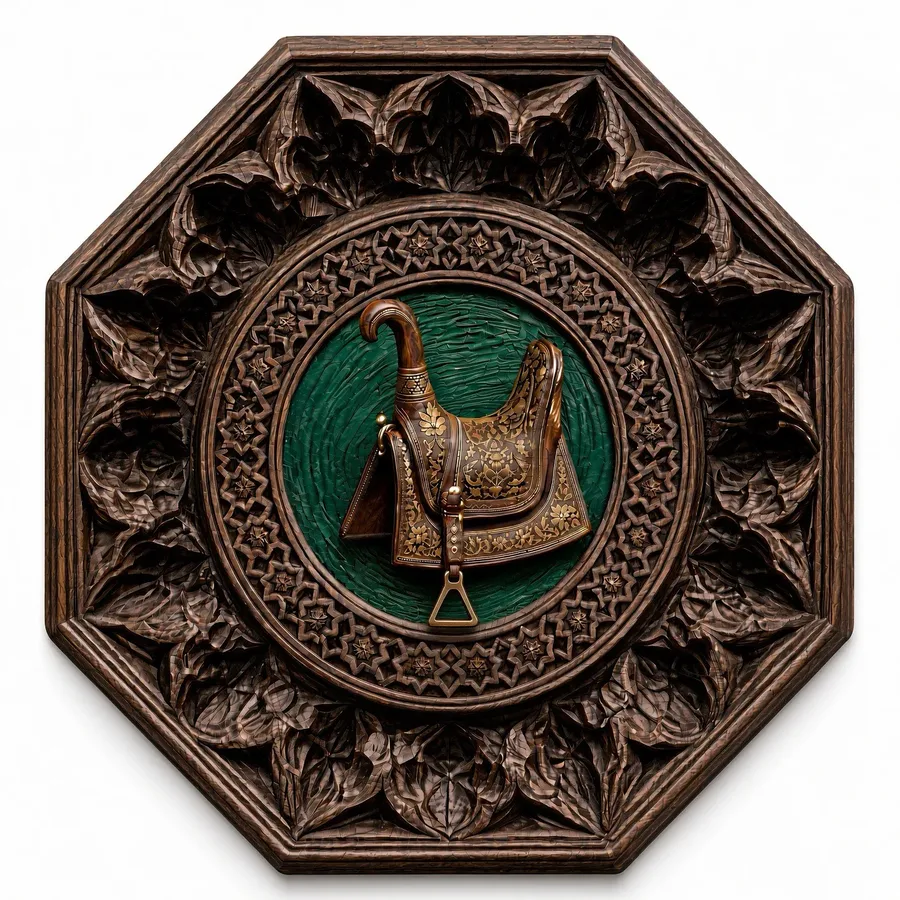
Saddlery
The saddle. It is the workshop that opens, and the only one working at full strength in the first year.
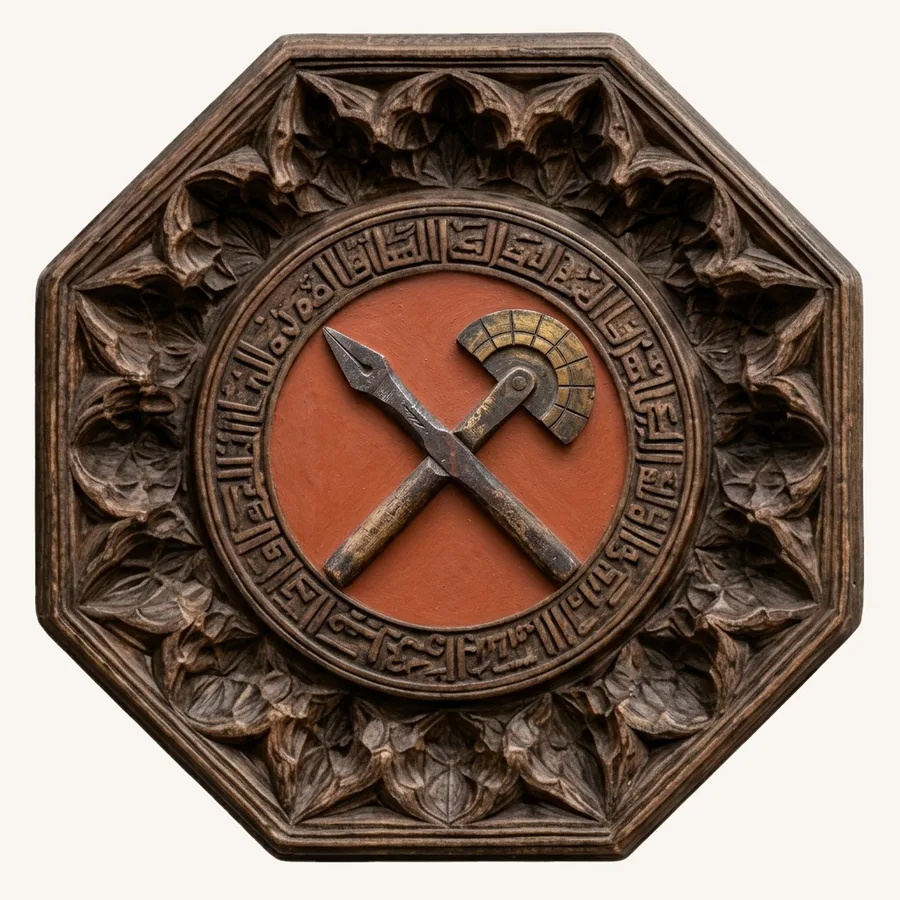
Calligraphy and the book
The reed pen and the protractor. The second, when saddlery stands on its own.
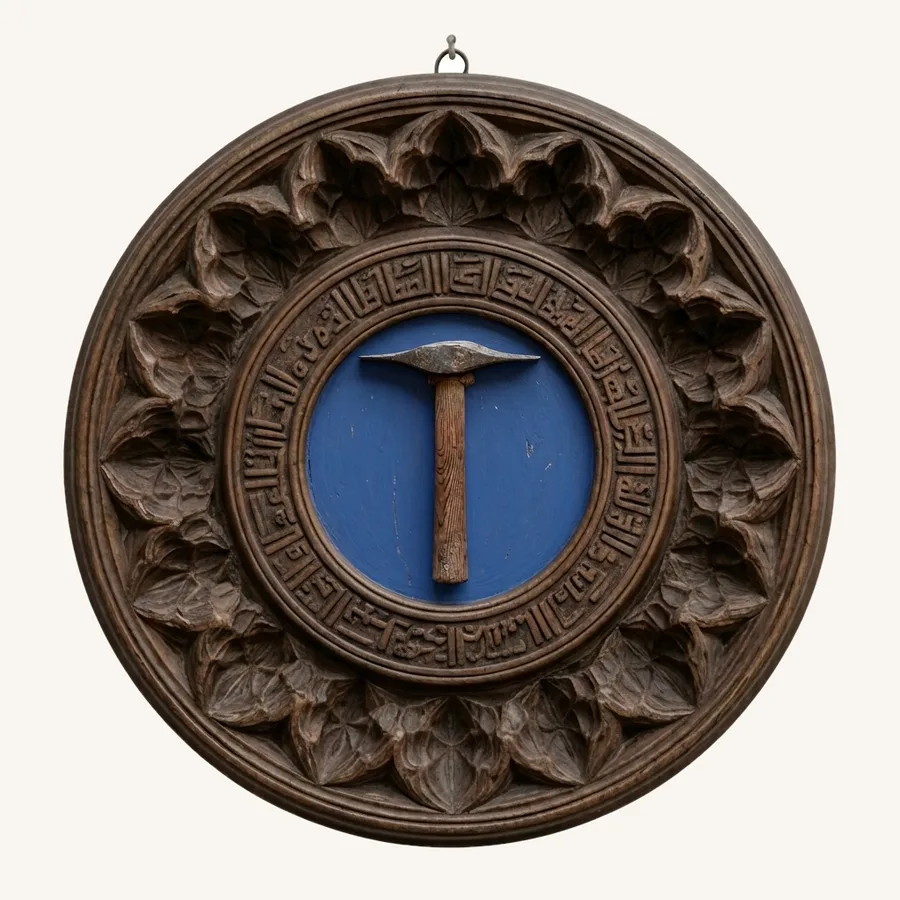
Zellij
The menqach, the hammer with which the tile is cut.
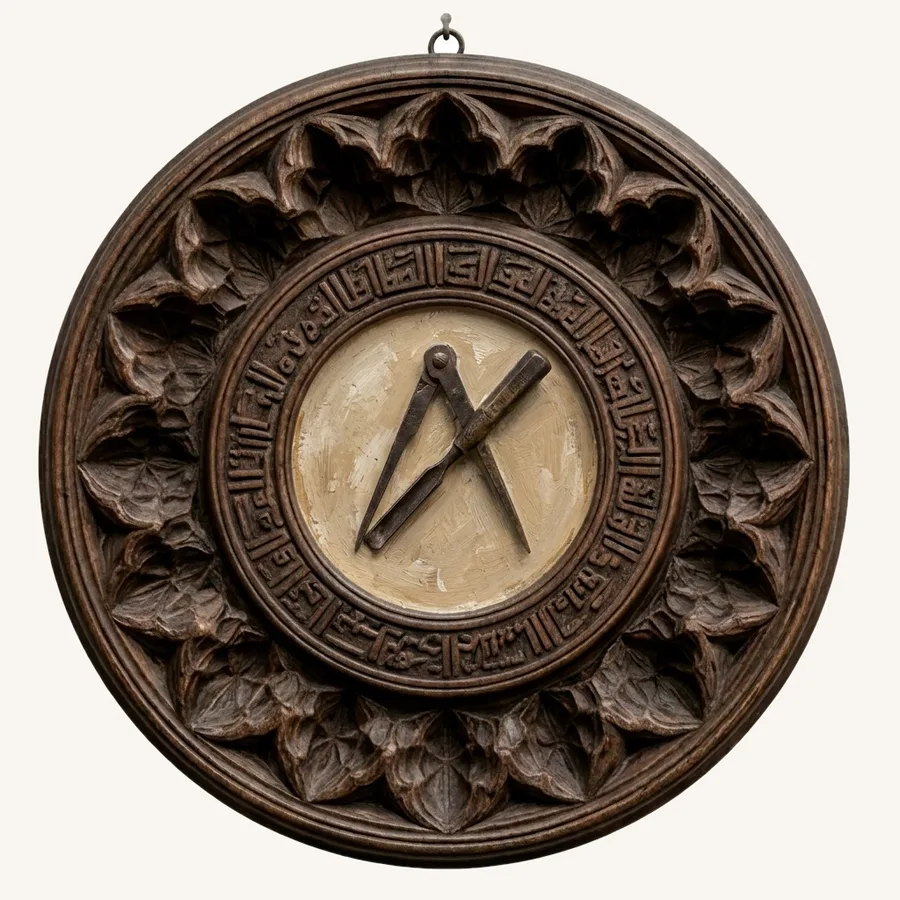
Plaster and muqarnas
The compass, from which every layout starts.
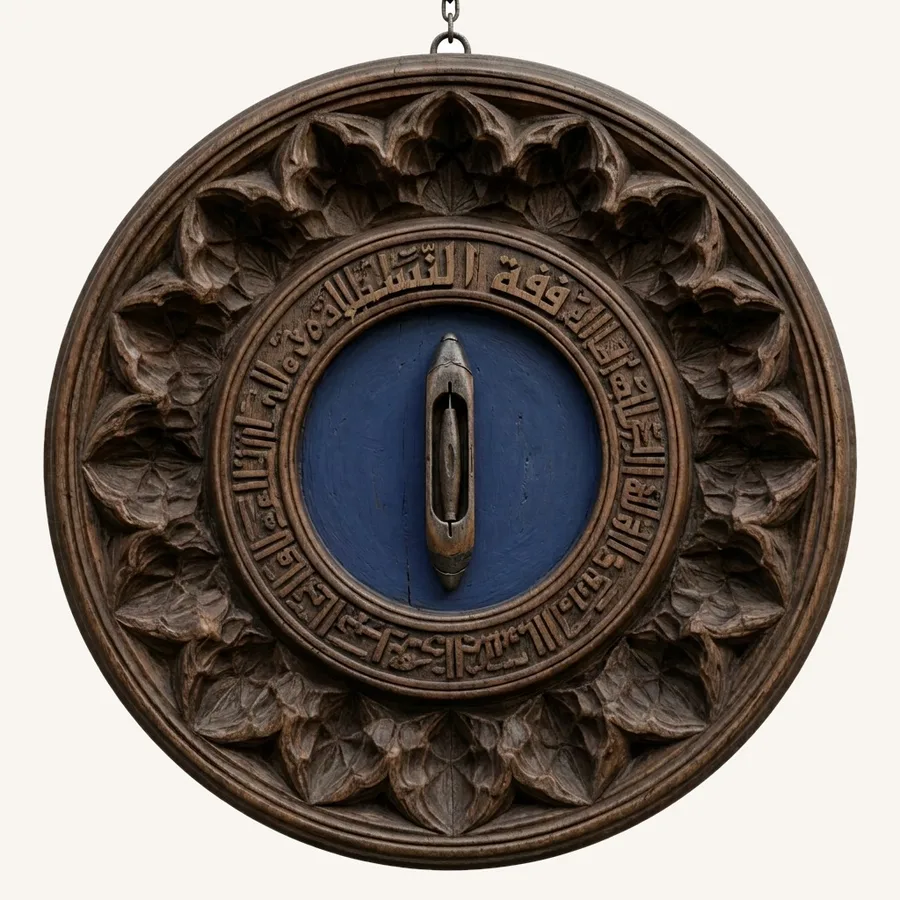
Weaving and brocade
The shuttle.
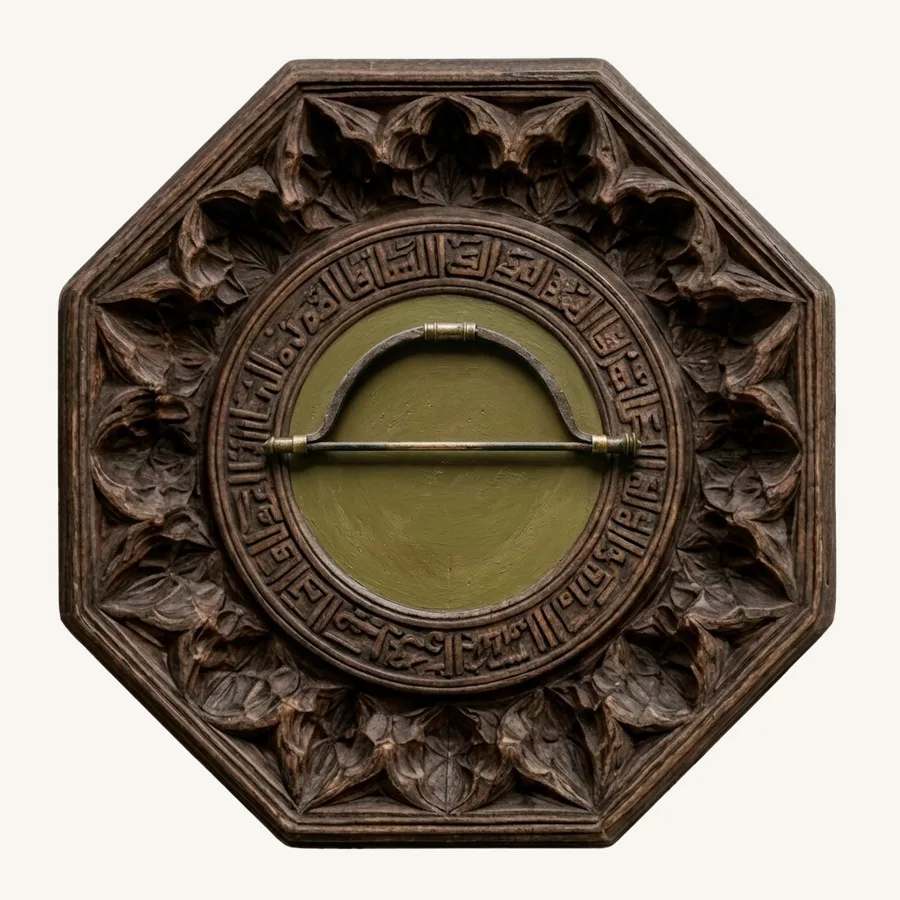
Wood and carving
The bow drill. The third master of saddlery comes from here.
What is produced
Single pieces or short series to commission: made-to-measure saddles, harness, fine luggage, for stables, collectors, fashion houses, institutions. The house does not produce catalogue objects and does not sell to the casual visitor, and the constraint is arithmetical before it is a matter of taste, since work sold at retail margins does not sustain properly paid masters, and a workshop that begins to make small objects stops being a school within two years.
Saddlery: leather, metal, wood·Work to commission·The body and the day·The passage to master