WHO CARRIES IT
Who carries the project
The project is led by Pietro Siffi, who wrote its documents and is following its constitution.
An academic background in medieval history and philosophy, and a professional career as country manager in international technology companies, with collaborations with cultural foundations in the United States. He works on the design of intentional communities and on the sociology of spaces, and has produced events and exhibitions.
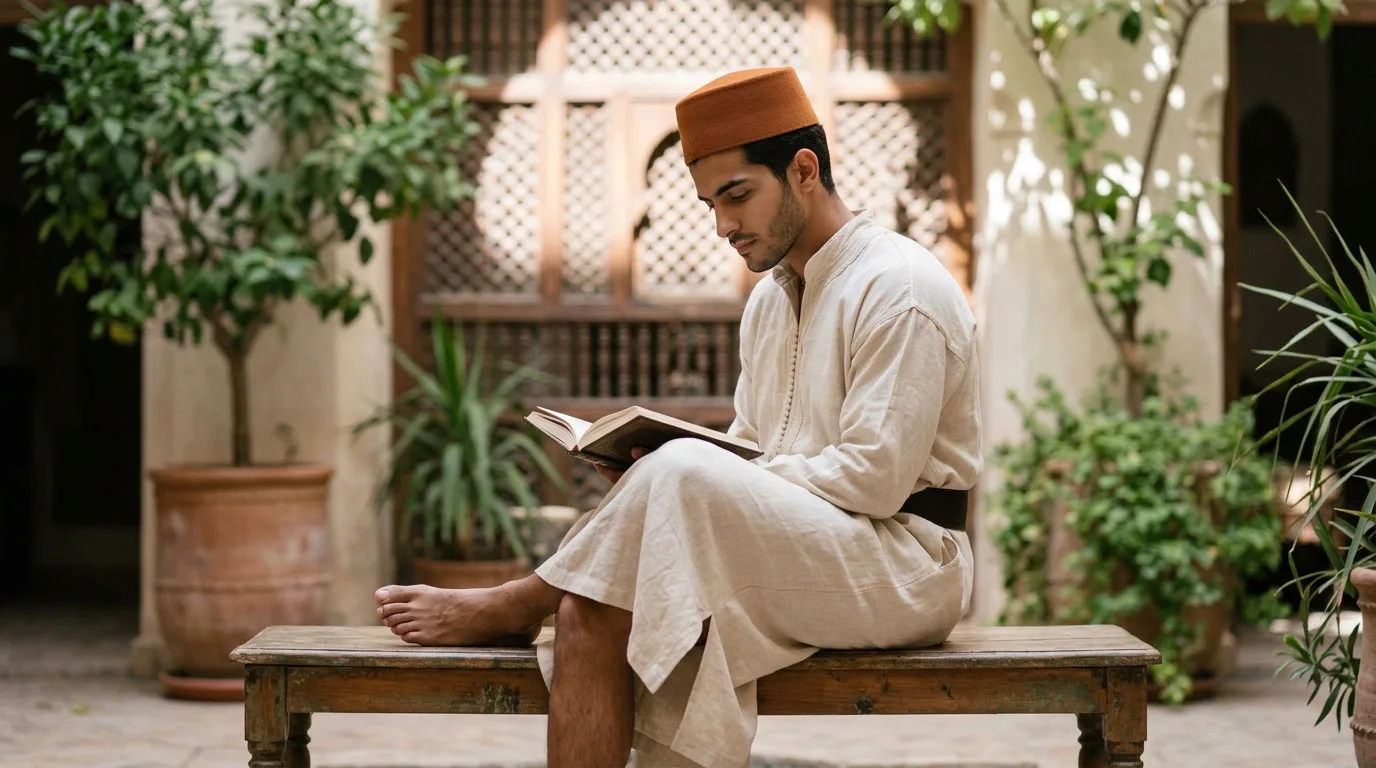
He does not deal in real estate in the current sense of the term. The work consists in designing human and productive arrangements in which managerial rigour goes together with a humanist conception of work, restoring to the manual craft and to the territory a lasting dignity. The same framework has been written twice: here, and for a house of the crafts in the medina of Fez.
What position he will have in the house
No power over the assembly. The resolutions of the assembly are not subject to approval, confirmation, veto or reform by the founder; no powers of appointment or designation in the bodies, no additional voting rights and no special categories of members are reserved to him.
He is reserved a personal, lifelong and non-transferable right of lodging in the premises designated for the purpose, constituted by notarial deed. Whoever lives in the house by virtue of that right observes the common rules like every other resident: if he is a member he has one vote like every other member, if he is not he does not take part in the deliberations. This provision too can be amended only unanimously.
The reason for the clause is practical before it is moral. A project of this kind does not hold if it depends on the person who started it, and the simplest way to verify that is to take from that person, in writing and from the outset, every means of imposing himself. If the statutes work, they must be able to be founded again by people who are not the one who wrote them.
The two twin projects
The Sicilian house and the one in Fez share the same protocol and share nothing in property. They are two distinct tests of the same framework in two legal systems and two religious traditions, and that is why the statutes were written first in Sicily and then rewritten in Morocco without altering their fundamental clauses.