COMMON LIFE
The day and the rule
The members of the house are selected, and the selection is strict. Once admitted, the rule applies to everyone in the same way.
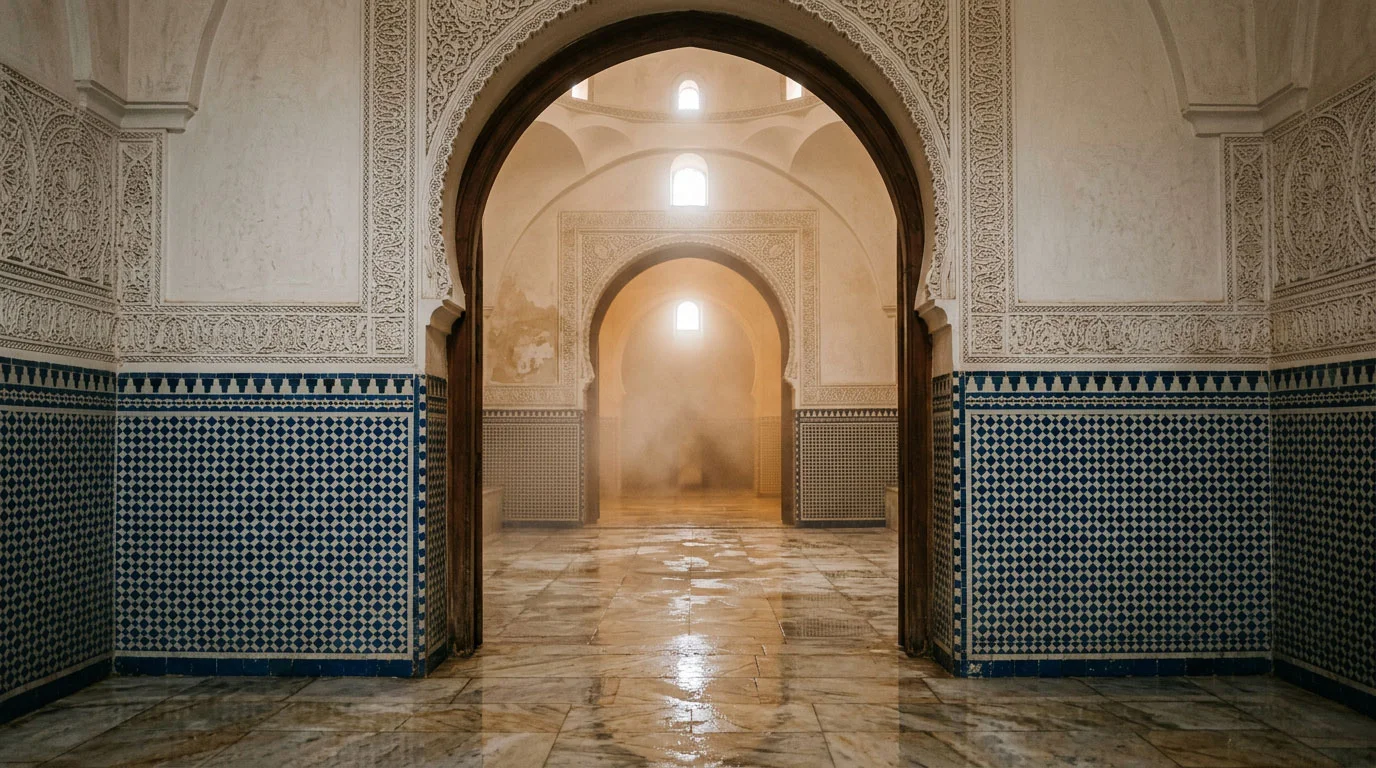
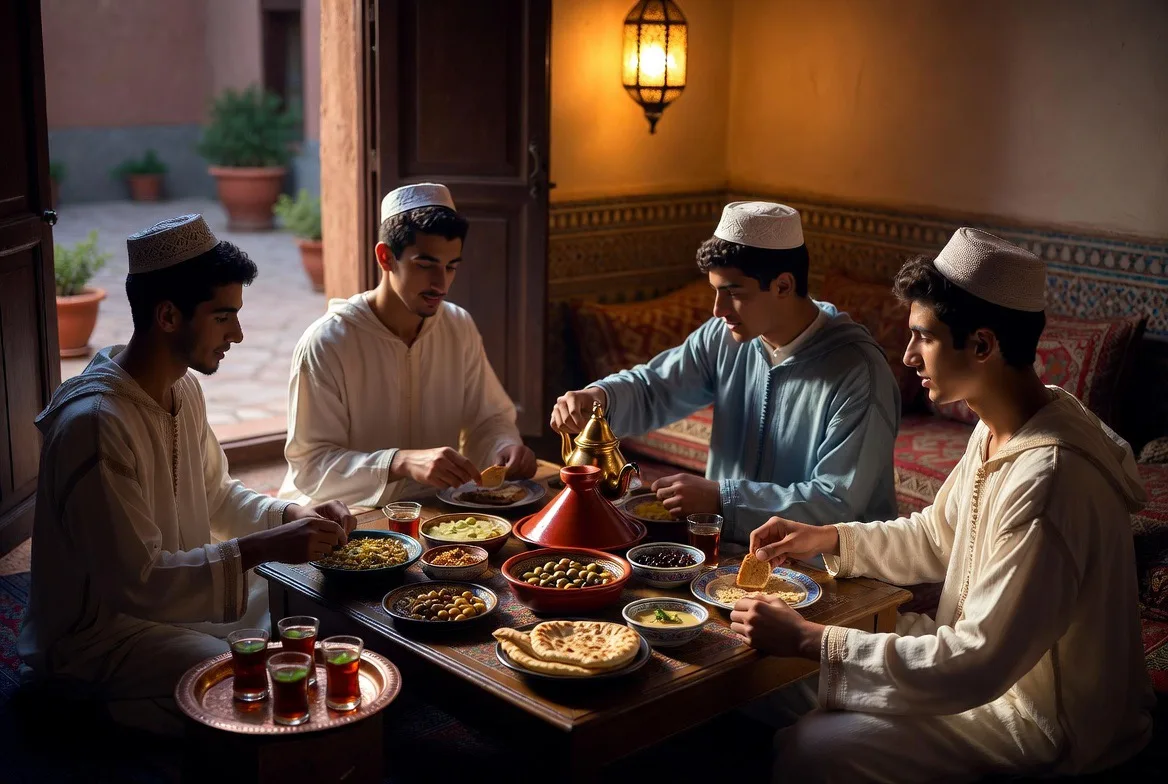
The members of the house call one another rifāq, companions. The same hours, the same table, the same service shifts, the same working dress. The son of a well-off family sweeps on the same terms as an apprentice who arrived with nothing, and neither is marked by what he arrived with. The statutes say so in express terms: no outward distinction of treatment is allowed among the rifāq on account of anyone’s economic or family circumstances.
The rule does not pursue austerity for its own sake, but aims to make a difficult thing possible, namely that seventeen people at the opening, and about thirty when the house is at full strength, work together for years without the differences they started with becoming hierarchies.
How one enters
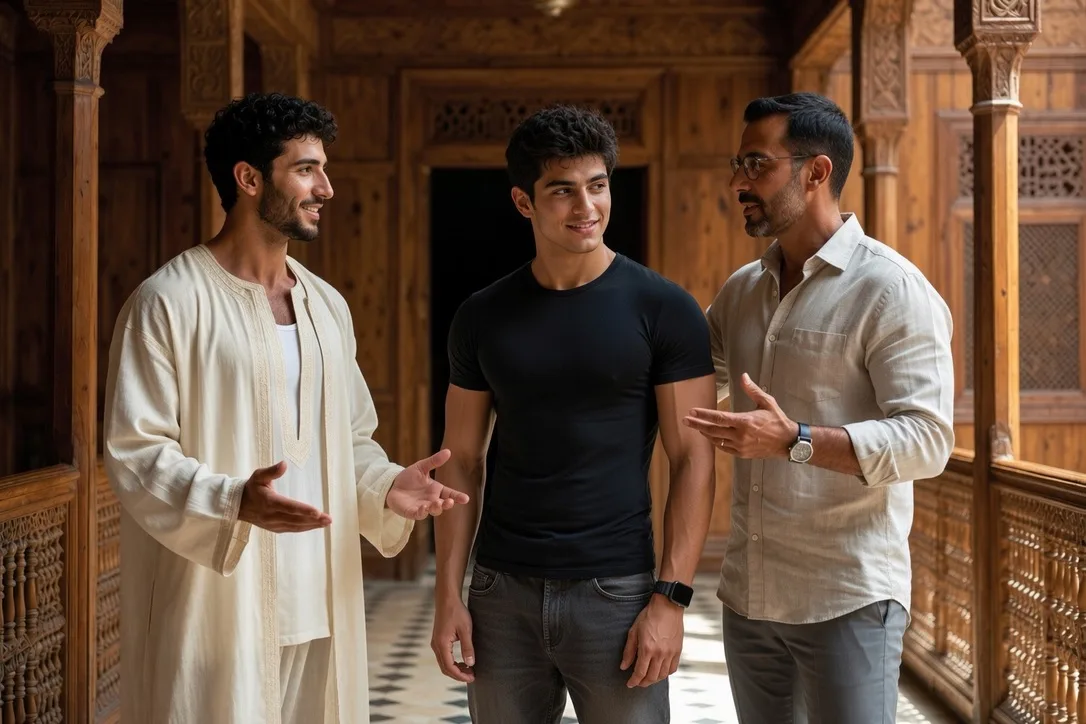
Individual application, paid trial, apprenticeship contract, and the vote after six months.
Nizam ad-dar, the rules
Hours, shifts, use of the common spaces, custody of the tools, internal sanctions. The rifāq themselves review them, at least once a year.
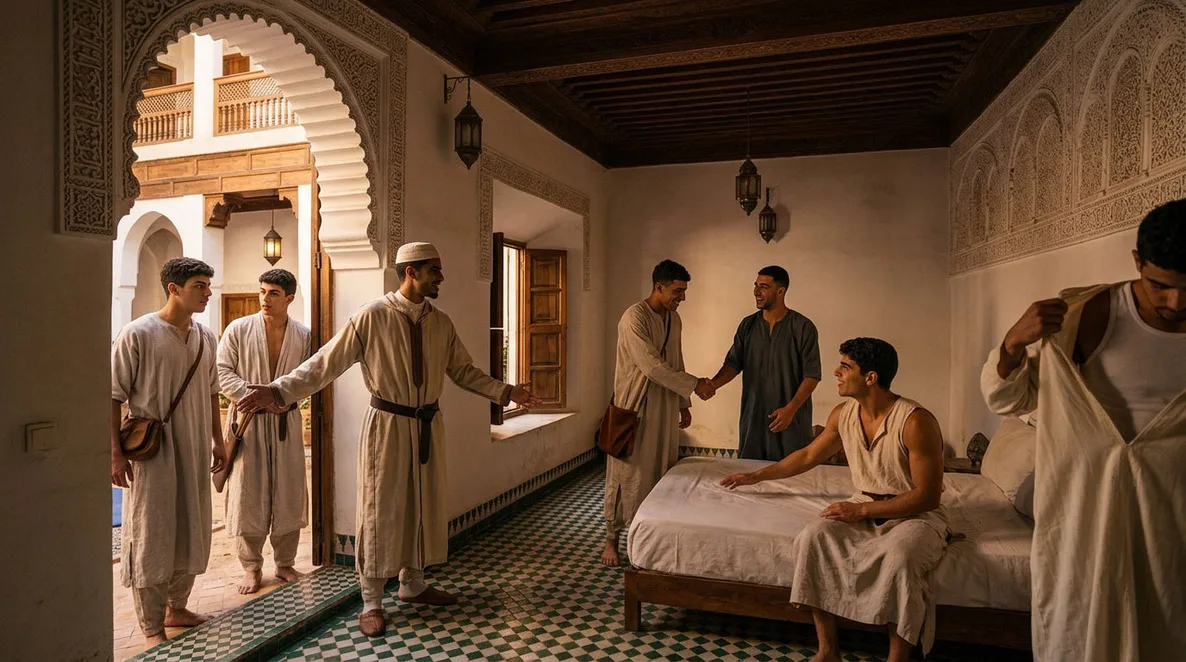
Dar al-Bidaya
The trial wing, open to anyone and not only to applicants: a stay that cannot be bought and that promises nothing.
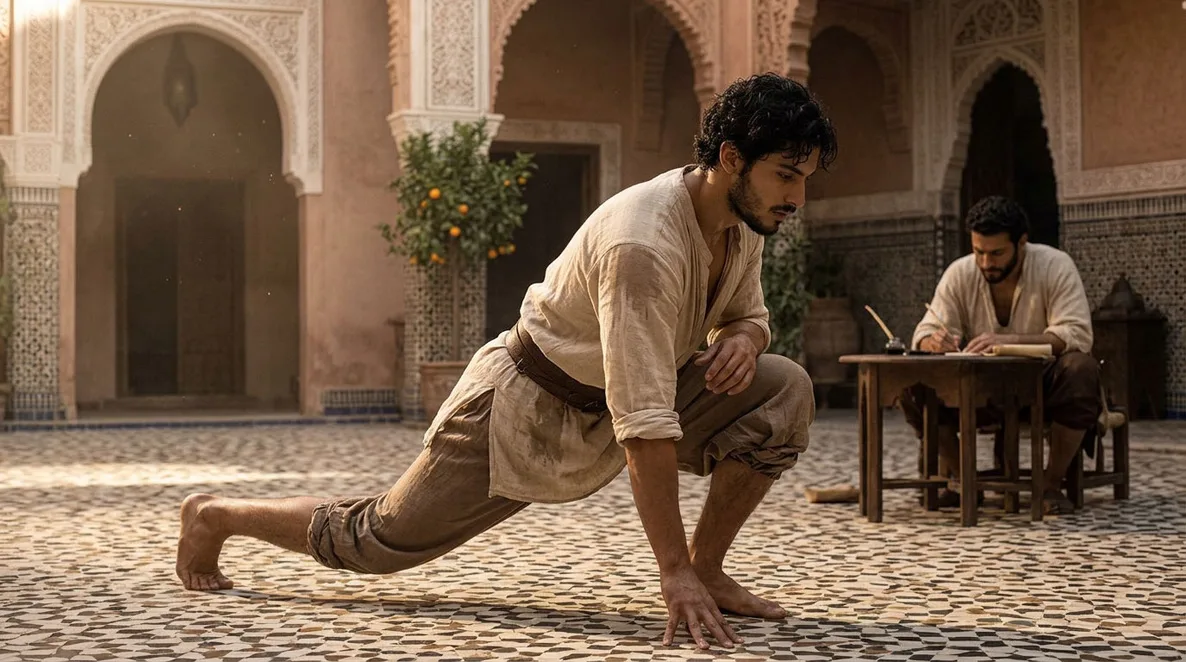
The body and the day
Riding, archery, swimming, gymnasium, hammam, and the matches with the local boys. The riding ring is also the testing ground of the saddlery.
The common spaces
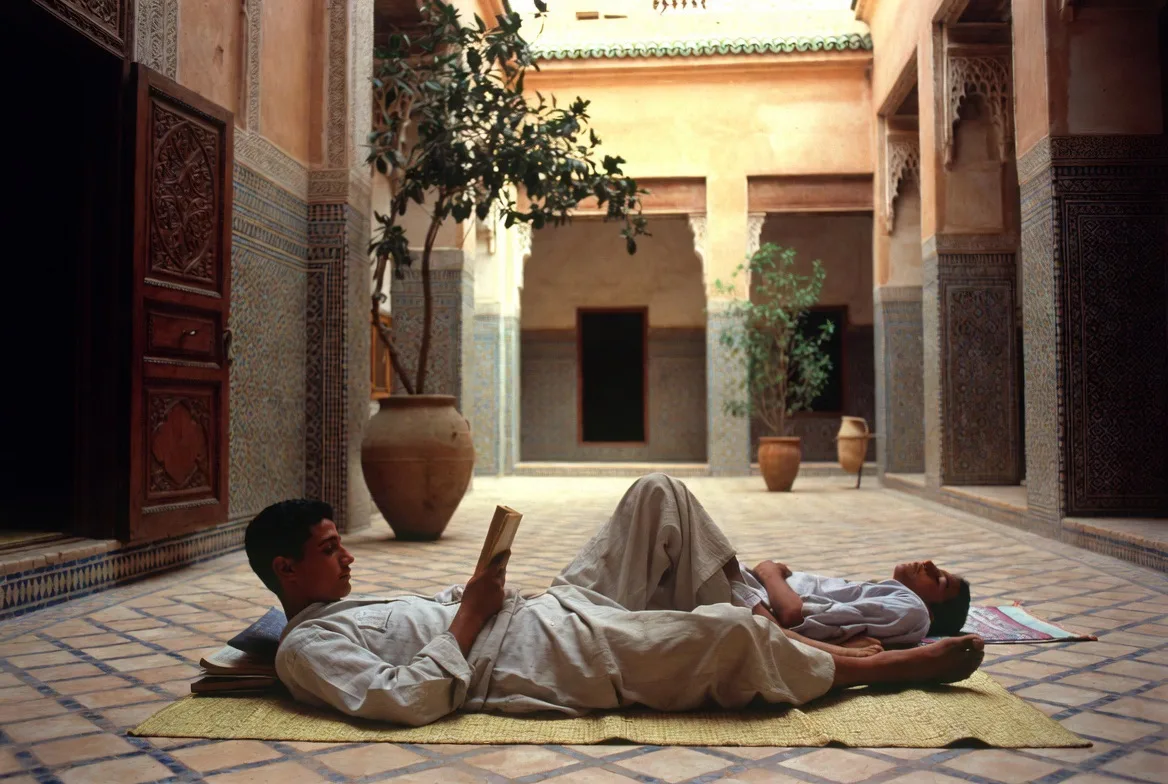
Rooms with fine furnishings, reading rooms, summer and winter sitting rooms, spaces for study and shared work.
What the members bring
Their own craft, their own masters, and their own means where they have them. The house is founded by the community that lives in it, and this is what distinguishes it from a welfare scheme: whoever enters does not receive a service, he enters a body for which he becomes responsible.
The code
What the tradition calls futuwwa: loyalty among companions, obligation towards those who have less, self-mastery, and duties that run in both directions between a master and his apprentice. Rather than being taught in lessons, it is the name the medieval collections gave to a set of verifiable behaviours.
وَمِنَ الْفُتُوَّةِ تَرْكُ طَلَبِ عَثَرَاتِ الْإِخْوَانِ
Wa-mina l-futuwwati tarku ṭalabi ʿatharāti l-ikhwān
«It is part of futuwwa to give up looking for the stumbles of one’s companions.»
Al-Sulami (d. 1021), Kitab al-futuwwa, part one.
What is shown to Europe
The skill of the work, and the part of a civilisation that Europe has largely stopped seeing: charity as an obligation and not an impulse, the education of the young through work, and rank left at the door. These are things that are shown by being seen in operation, and that is why the public programme takes place inside the house and under its rule.