FIRST WORKSHOP
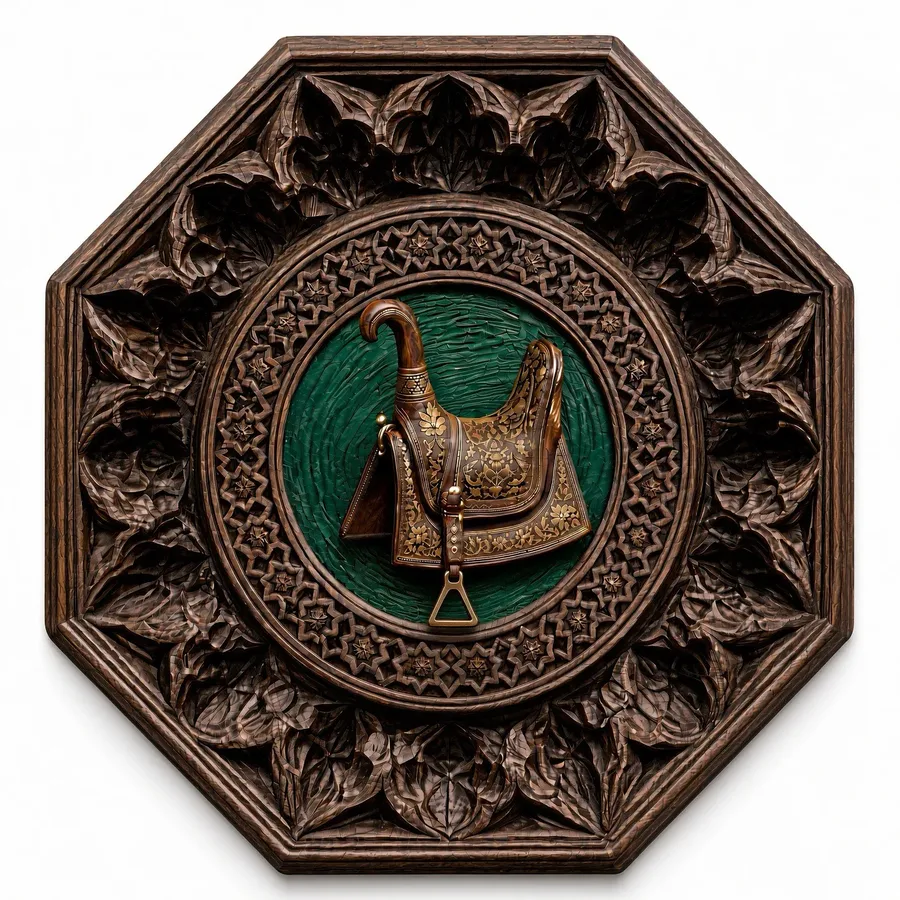
Saddlery: leather, wood, metal
Saddlery is the workshop with which the house opens, alone, and the craft that best explains why a school of this kind needs three materials together.
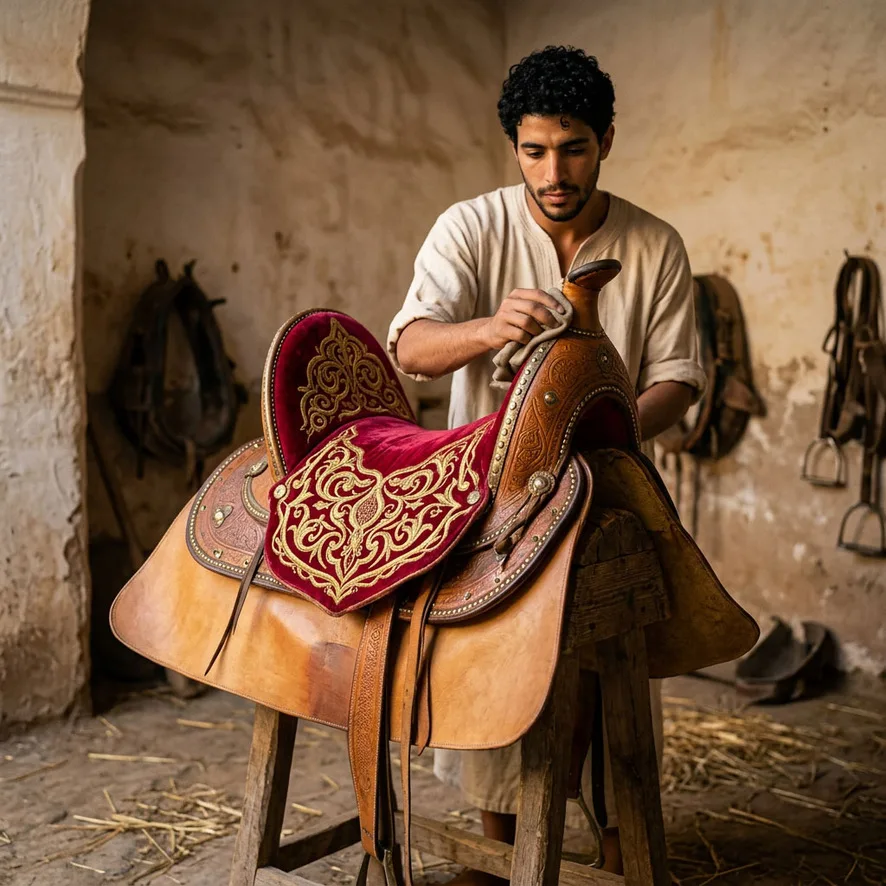
A complete harness requires leather tanned and hand-stitched, the wood of the tree, and the metal of the buckles, the stirrups and the spurs. None of the three is worked well by someone who does not know how the other two behave: the thickness of the buckle decides the fold of the leather, the moisture of the wood decides how the stitching holds. A workshop that keeps them apart produces correct pieces and never excellent ones.
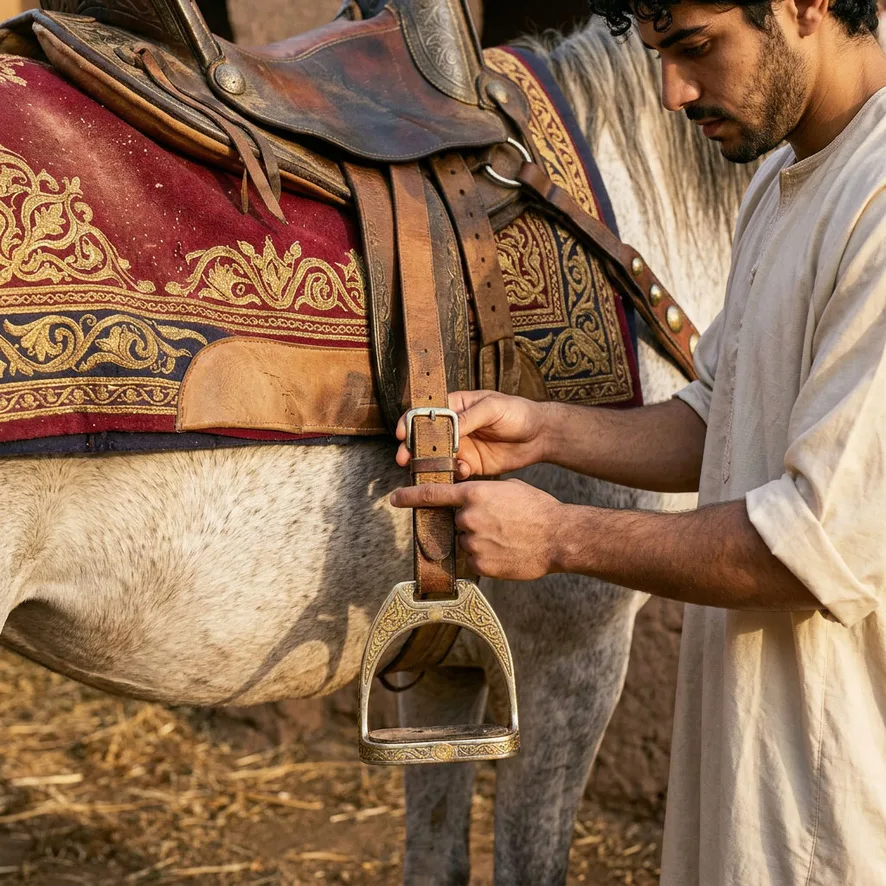
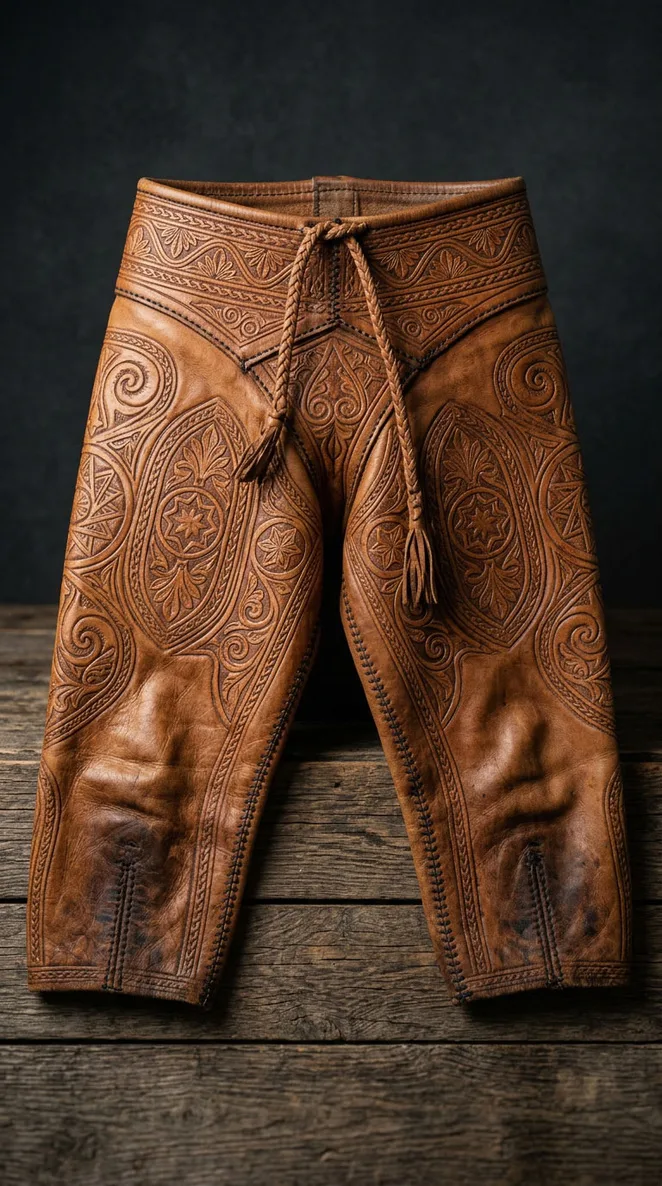
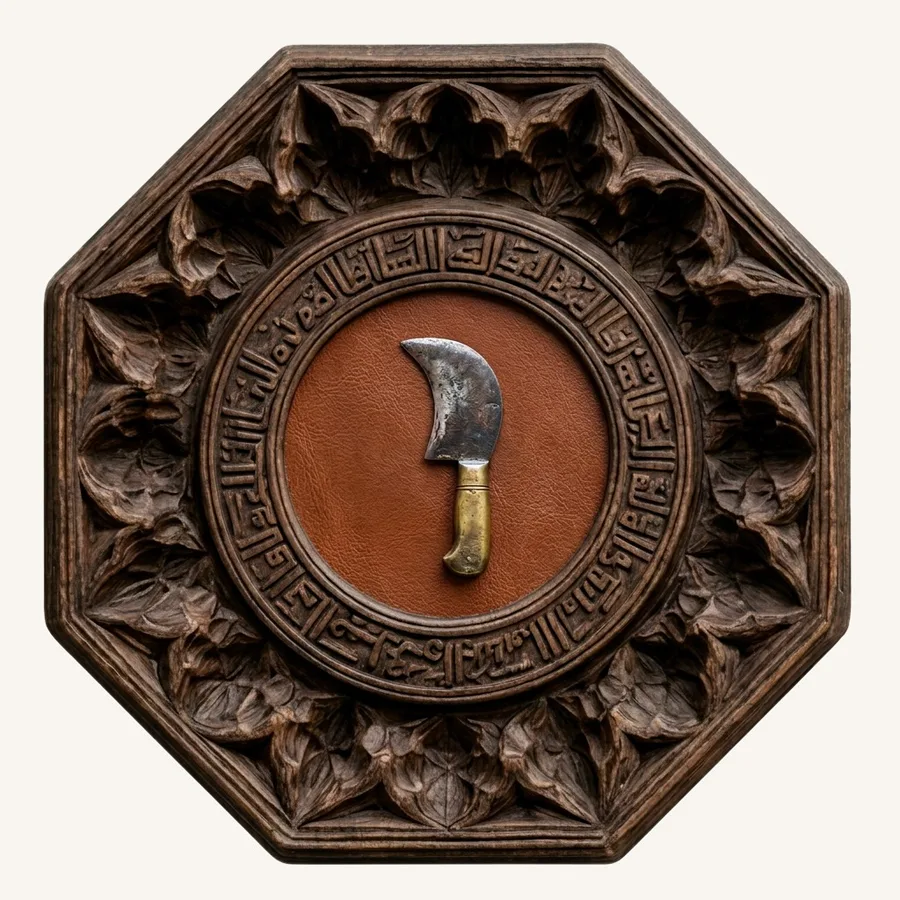
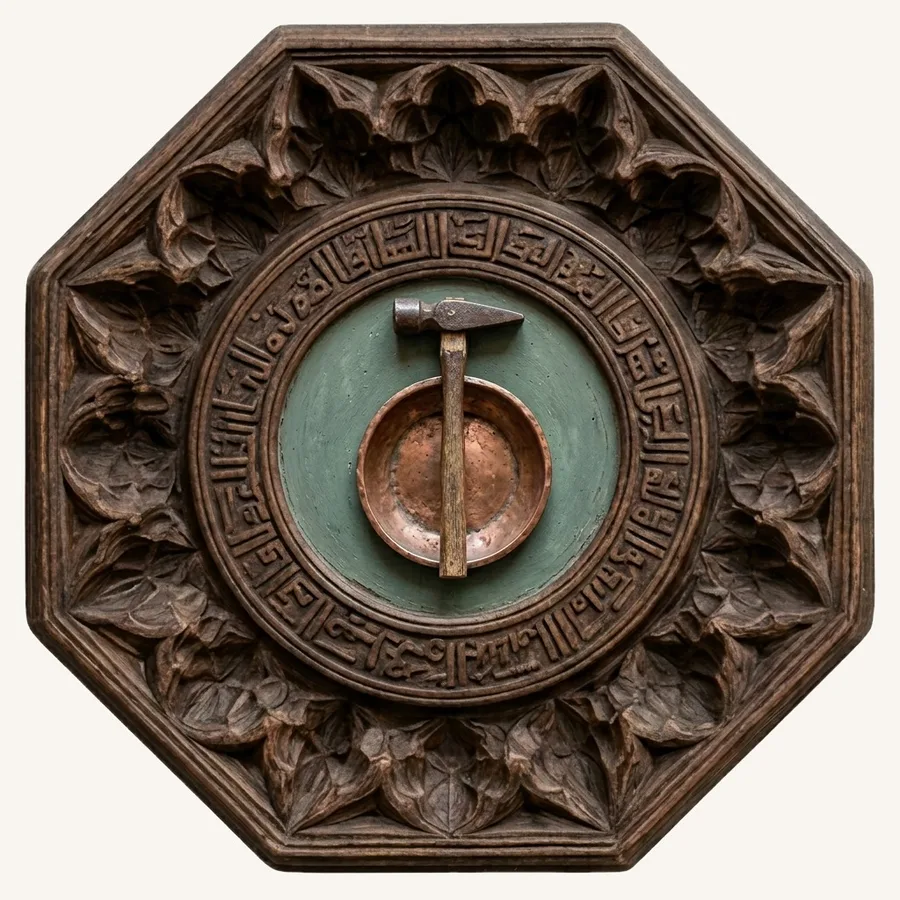
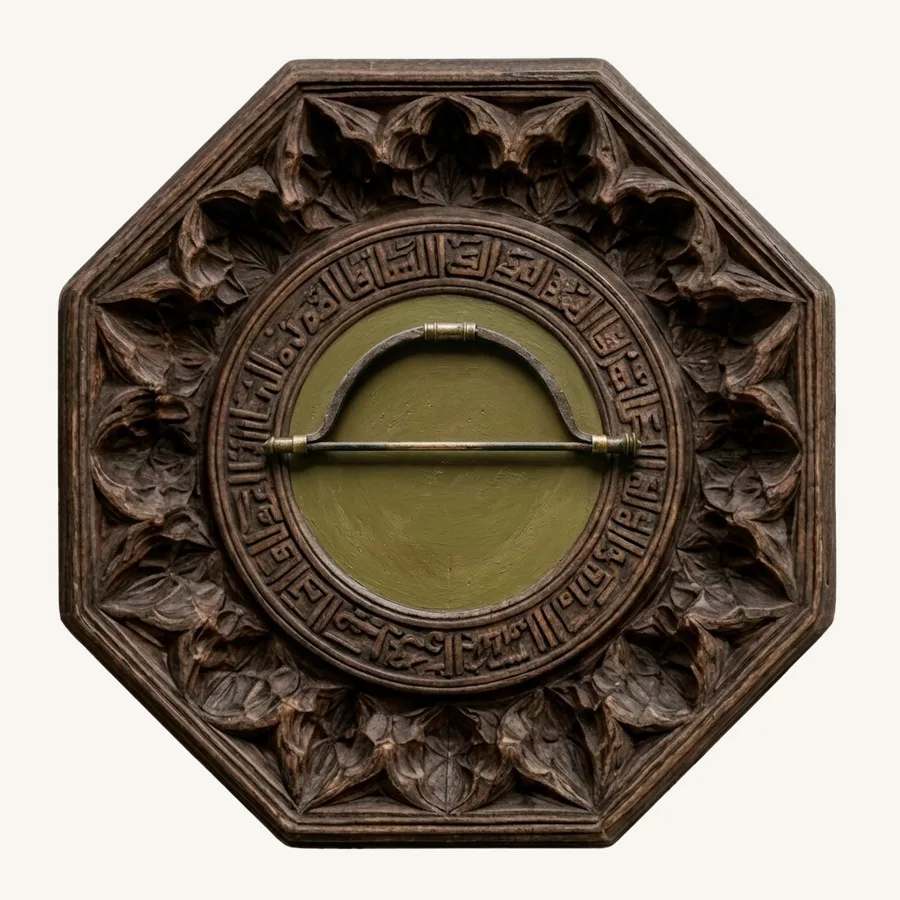
Leather, metal, wood: the three materials of the saddle, and the three masters it takes to hold it.
The operations
- — Leather. Tanning, cutting, skiving, saddle stitching with two needles, cording and edging, and hot tooling, including in gold.
- — Wood. Trees, saddle bows, forms and templates, and the carving of the details that remain visible.
- — Metal. Hot forging, upsetting, chasing and finishing: stirrups, bits, buckles, spurs and fittings.
Alongside the commissions there is an internal job that never ends: the belts and the slippers of the house’s outfit, made here from the offcuts of saddle leather. They are two simple, repeated operations, and it is on those that an apprentice learns saddle stitching before a harness is put in his hands. At the other end of the same work stands the belt of the ma’allim, in dark leather with hot tooling in gold leaf: the same operation taken to where only someone who has finished learning it arrives, and the mark that distinguishes a master within the house. The rest of the outfit is ordered from the craftsmen of Fez: what is of leather the saddlery makes, the linen and the wool it does not.
The forge room requires incombustible masonry, a hood, a flue of its own and dedicated combustion air, and it is kept apart from the workshop: fire and sparks do not belong with leather, paper and gold. It is one of the few design choices that precede the arrival of the masters, because it conditions the layout of the whole wing.
The clients
The market is that of made-to-measure pieces and restorations, and not that of serial riding goods: historical harness, leather furnishings for interiors, coverings and caskets, and the support work for the other workshops. The proximity to bookbinding has a technical reason, since hot tooling on leather is the same operation, and the same master can follow the apprentice in both.