SECOND WORKSHOP
Calligraphy and the book
The second workshop brings together writing and the physical making of the book, which in the Mediterranean tradition have never been two separate trades.
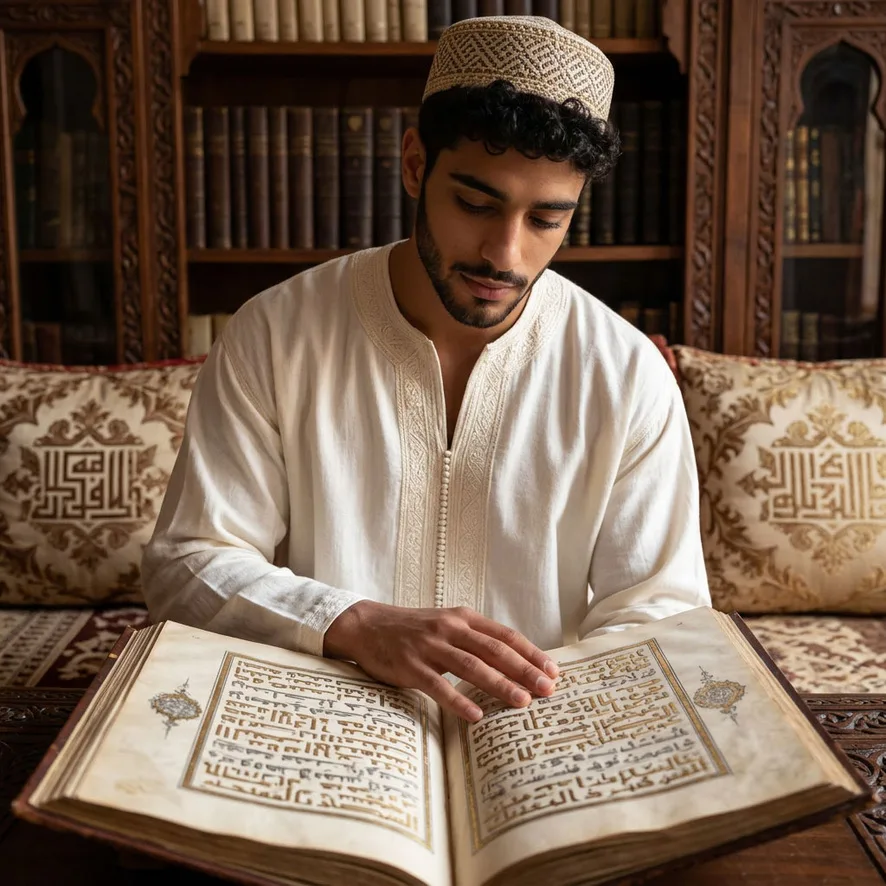
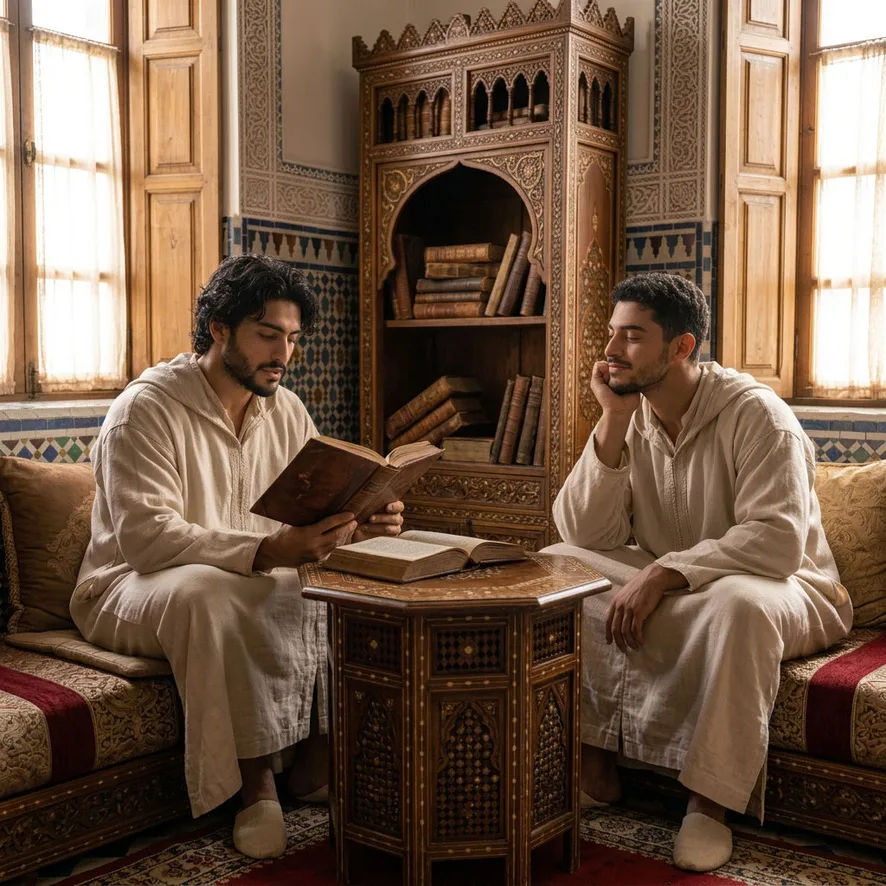
Arabic calligraphy is a discipline with a curriculum of its own, in which the apprentice copies the master’s models for years before receiving authorisation to sign. The long time answers a technical necessity before a custom, since the hand acquires sureness of stroke only by repetition, and no documented shortcut exists in any writing tradition.
The operations
- — Writing. Cutting the reed pen, preparing the inks, the principal scripts and the composition of the page.
- — Paper and supports. Preparation, sizing and burnishing; conservation of old supports.
- — Gilding and illumination. Leaf, mordant, and the marginal ornaments.
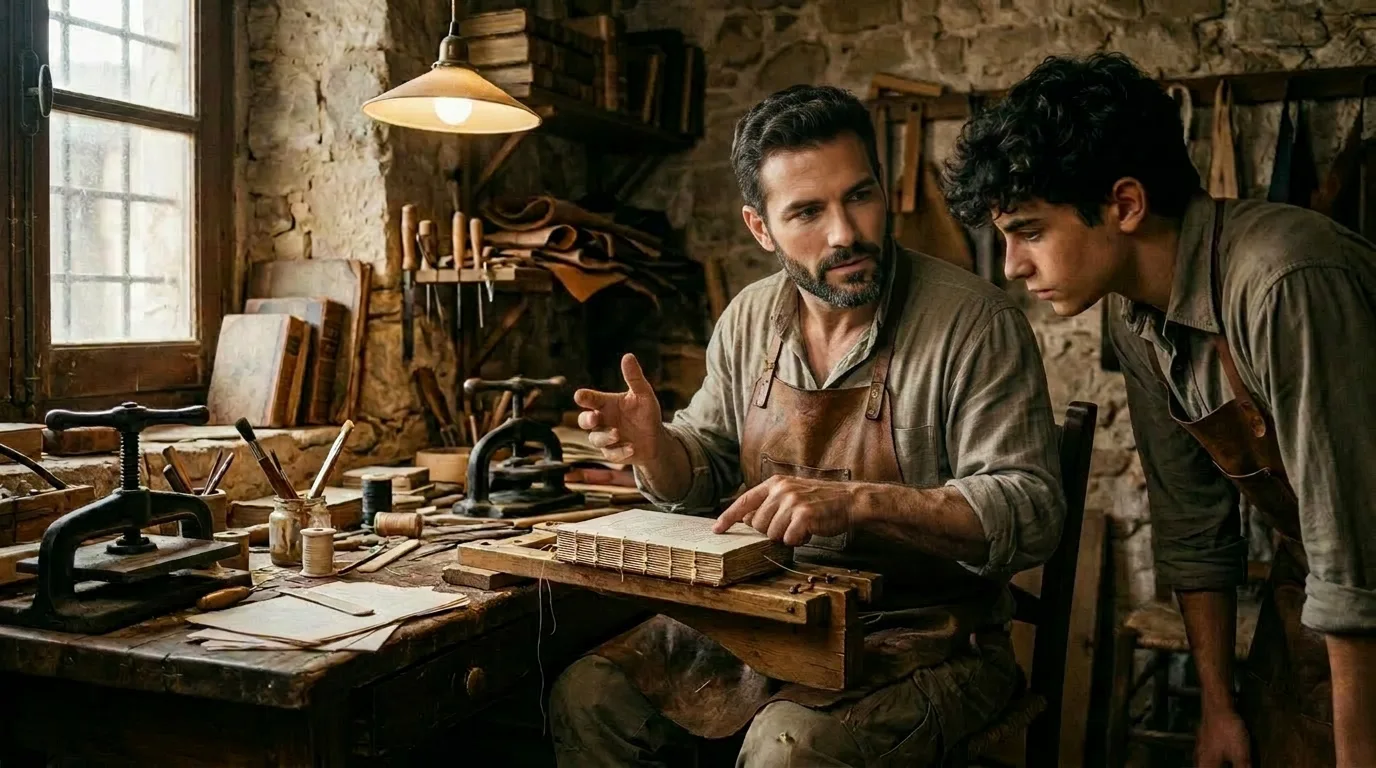
- — Binding. Sewing, spines, boards and leather covers, with blind and gold tooling.
Why it comes right after saddlery
Hot tooling on leather is the technique the two workshops have in common, and the irons, the press and the gilding are partly the same. Opening second, the bindery finds that equipment already installed and already in use, and the two masters together produce a range of work — caskets, cases, albums, large-format portfolios — that neither would make alone.
The clients
Art publishers, libraries and archives for conservation and fine bindings, institutions for diplomas and inscriptions, collectors for single pieces. It is also the workshop that supplies the house with its own inscriptions and registers, which means that the first client is the building itself.