THE INSTITUTION
Why this house
Al-Funduq as-Siqilli is born as a bridge between two cultures. It is neither a museum, nor a hotel, nor folklore: it is a house of crafts and formation, where a disposition of civilisation is handed on.
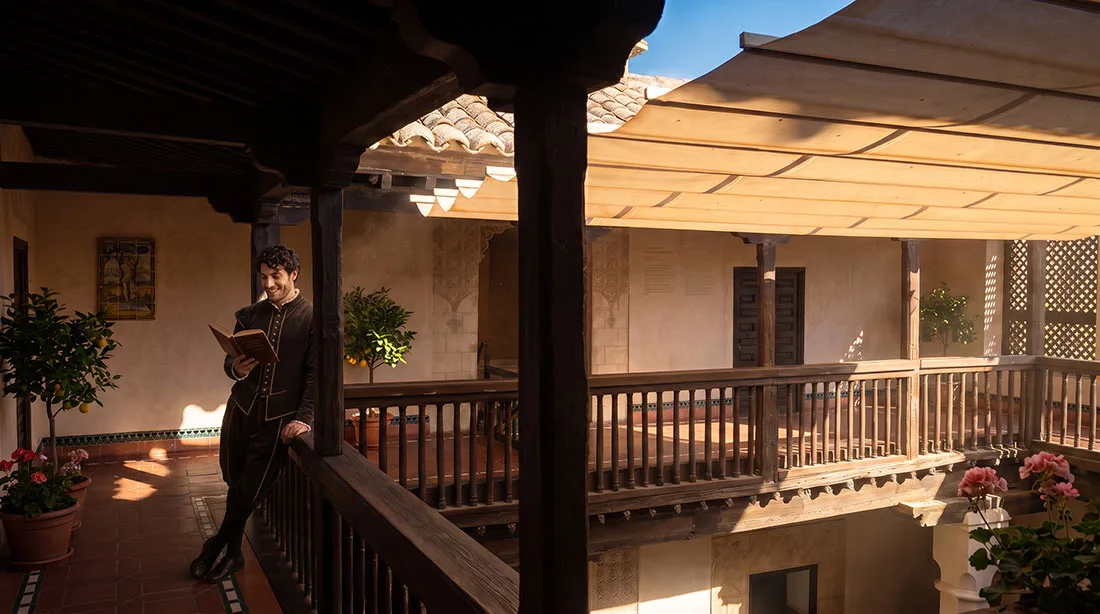
Arab-Islamic culture — of which Sicily, like Spain, is in part the heir — has before it two opportunities to make itself known in Europe in the most effective way.
The first is to show a high and noble face of Arab-Andalusian civilisation: not a claim, not assistance, not a showcase, but a living example of an ordered community. Education, traditional vocational formation, autonomy of government and of means, growth of character: when these elements stand together, the model need not advertise itself. It becomes desirable.
The second is to offer high value references to two youths. To young Arabs in Italy or Spain — non-Islamic nations — a discipline that motivates the challenge, opens prospects of work and of family, and gives honour of belonging without radicalisation. To young Europeans who no longer have any heritage to keep — or who no longer recognise, in their own tradition, a measure worthy of being handed on — the same house offers what is often missing: an order, a craft, a character, a rule accepted together with others. They are not asked to renounce Europe; they are offered the chance to relearn measure, also through a civilisation that, on this soil, is already in part their historical memory.
It is in the valuing of differences — distinct thresholds, distinct cultures, faiths respected in their own seat — that one can appreciate what is shared: the work of the hand, loyalty, respect for the given word, ordered coexistence.
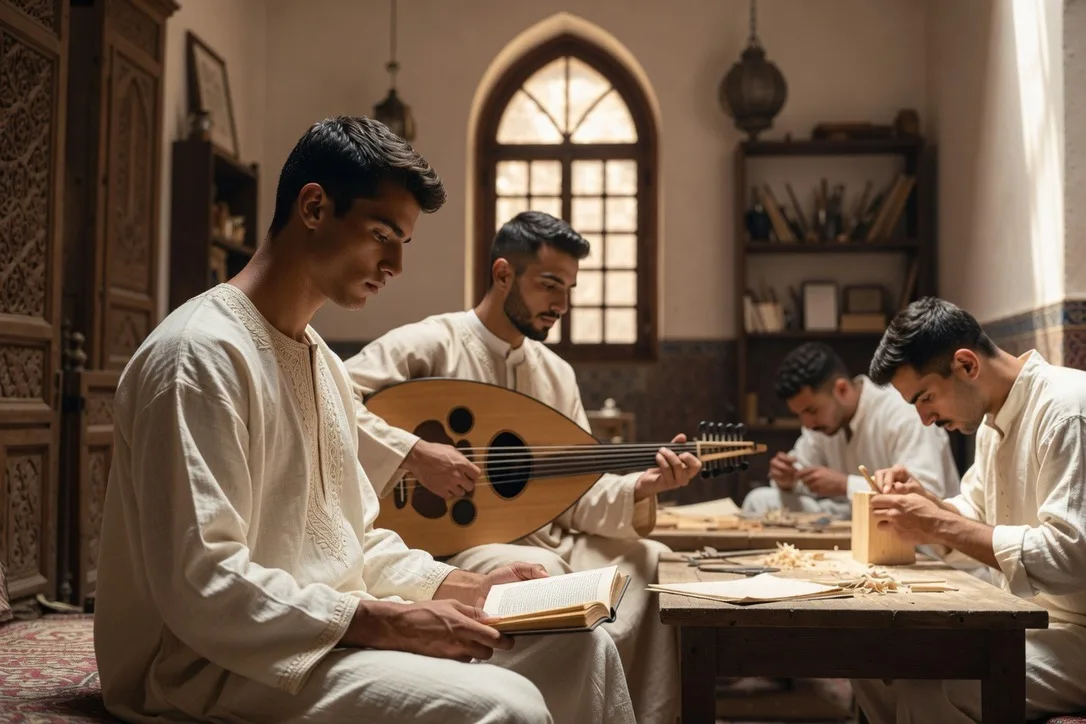
The bench and the discipline of the craft. Studio elaboration.
Pedagogy and the ethics of work
What is transmitted is not a speech. It is a severe pedagogy, rooted in futuwwa — a code of honour and loyalty among workshop companions — and in furūsiyya — horsemanship, archery, swimming, discipline of the body — practised here as sporting arts and as formation of character.
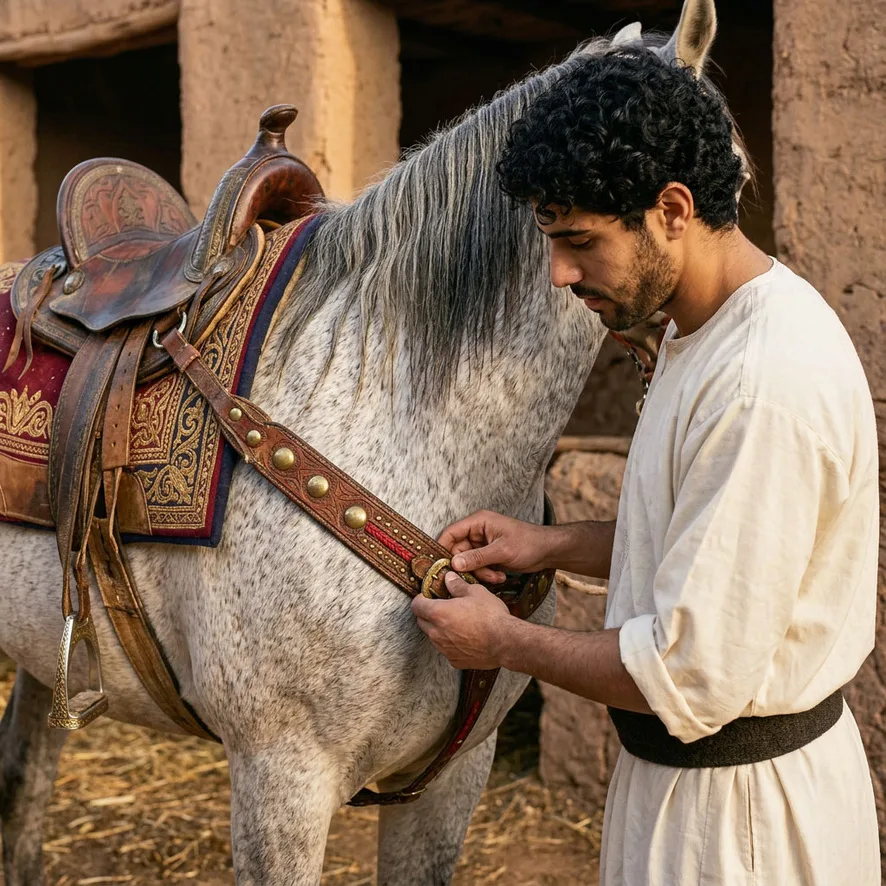
To the young man who arrives from the diaspora one offers neither a subsidy nor the forgetting of himself. One offers the teaching of a master (muʿallim), the discipline of a workshop of excellence, belonging to a house that asks for the utmost and returns mastery. Redemption passes through aṣ-ṣanʿa, through the craft mastered, not through pity.
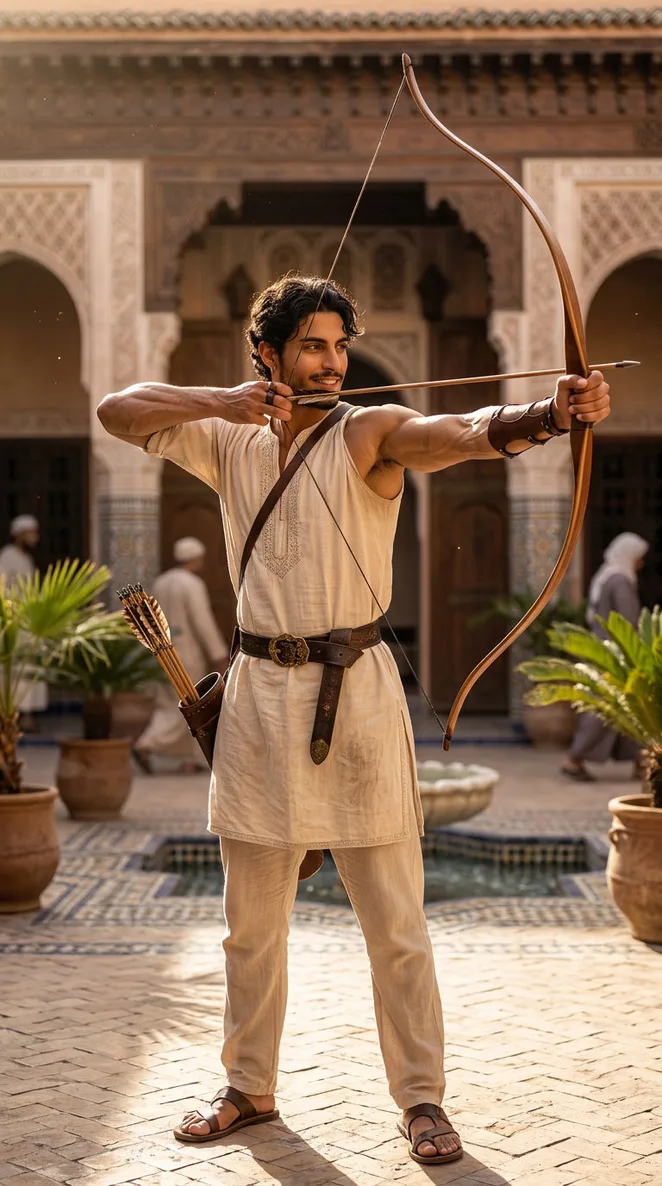
The bow. Studio elaboration.
Extremism and nihilism are not fought with the weakness of values, but with a higher and more exacting discipline. Not the hatred of the enclave: the nobility of character that imposes itself by conduct and by excellence of work.
The threshold
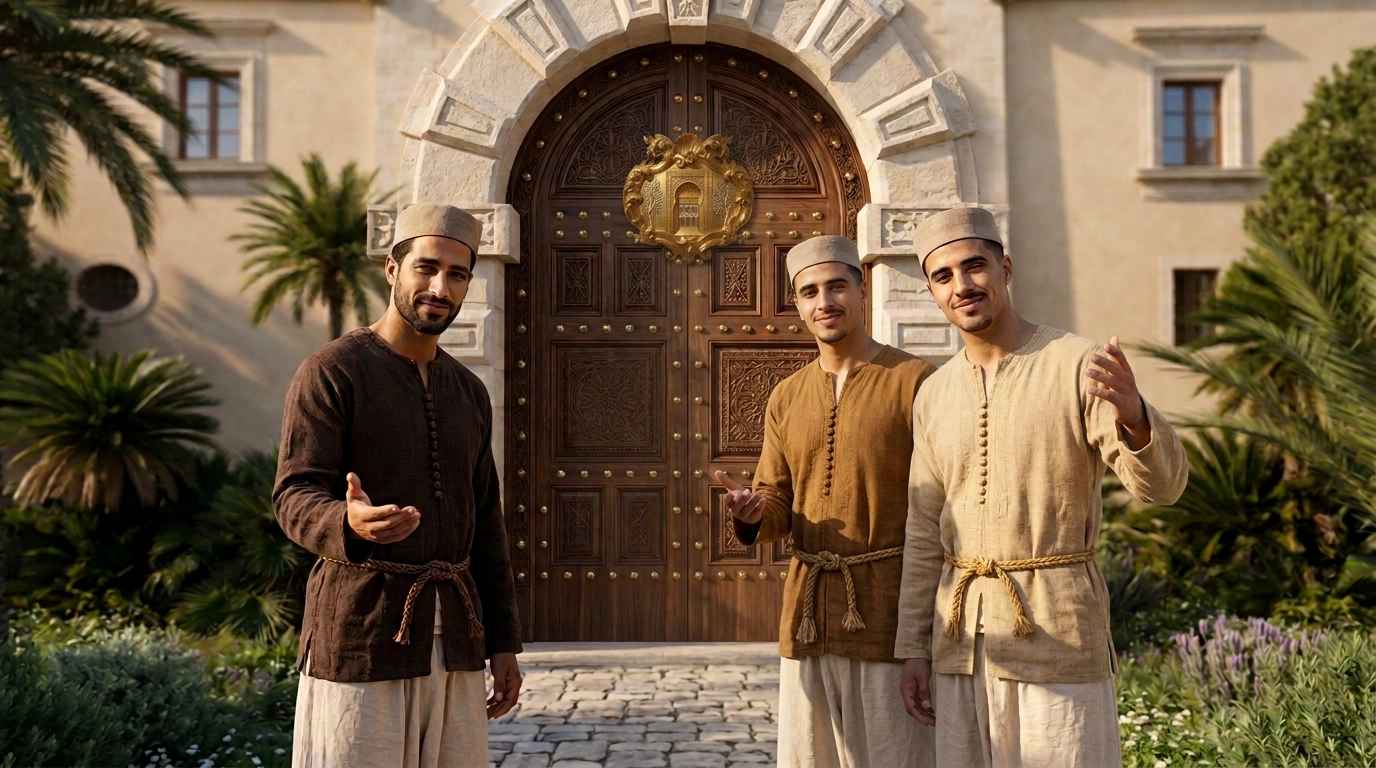
Access is mixed and secular. One is admitted by name and by aptitude, not by faith. Whoever practises Islam finds place and respect here — as in the historical funduq, and as in Venice at the Fontego dei Turchi. Whoever is not Muslim enters, works and lives in full right. The association is not a religious body; faith remains the member’s. What the house institutes is education, not worship.
Whoever enters subscribes the niẓām ad-dār: hours, conduct, apprenticeship, composition of disputes. He respects the laws of the State. No derogation, no ghetto, no filiation. Beside it, in Fès, the Riad Al-Uns holds the same rule on another threshold — its own and cultic. The two houses are cousins, not twins. Neither shore is master of the other.
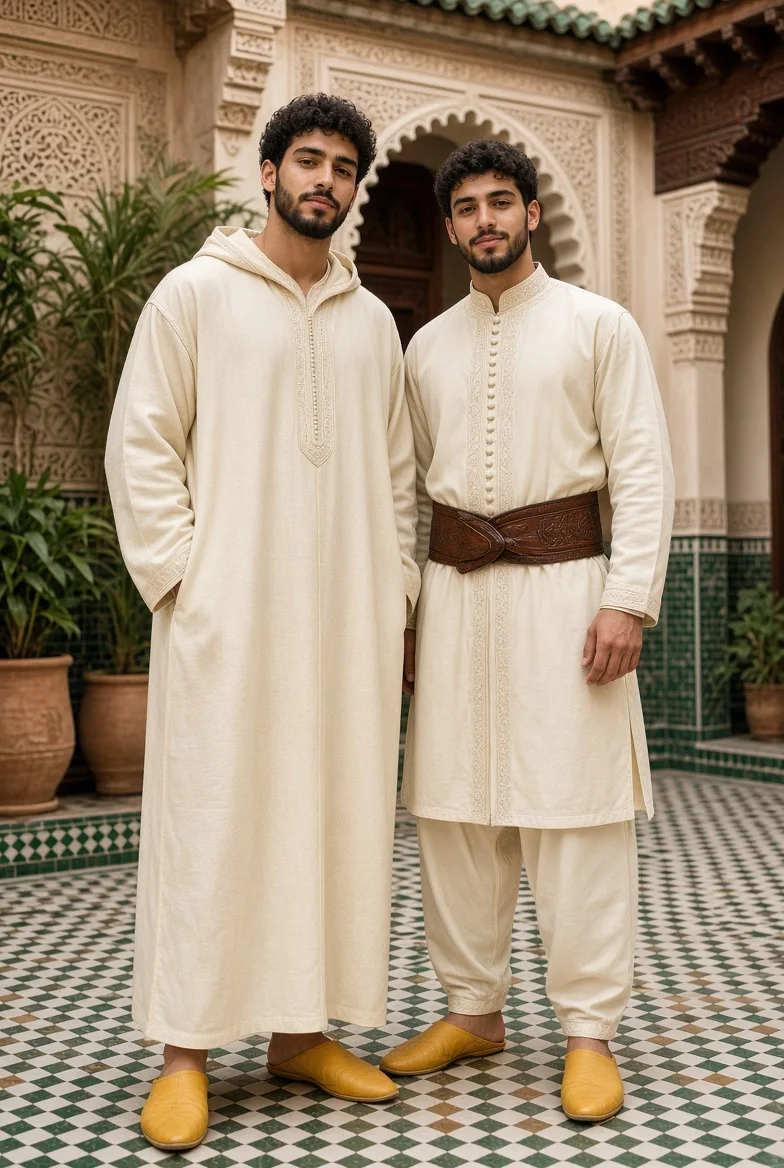
Two forms, one measure. Studio elaboration.
In the workshop
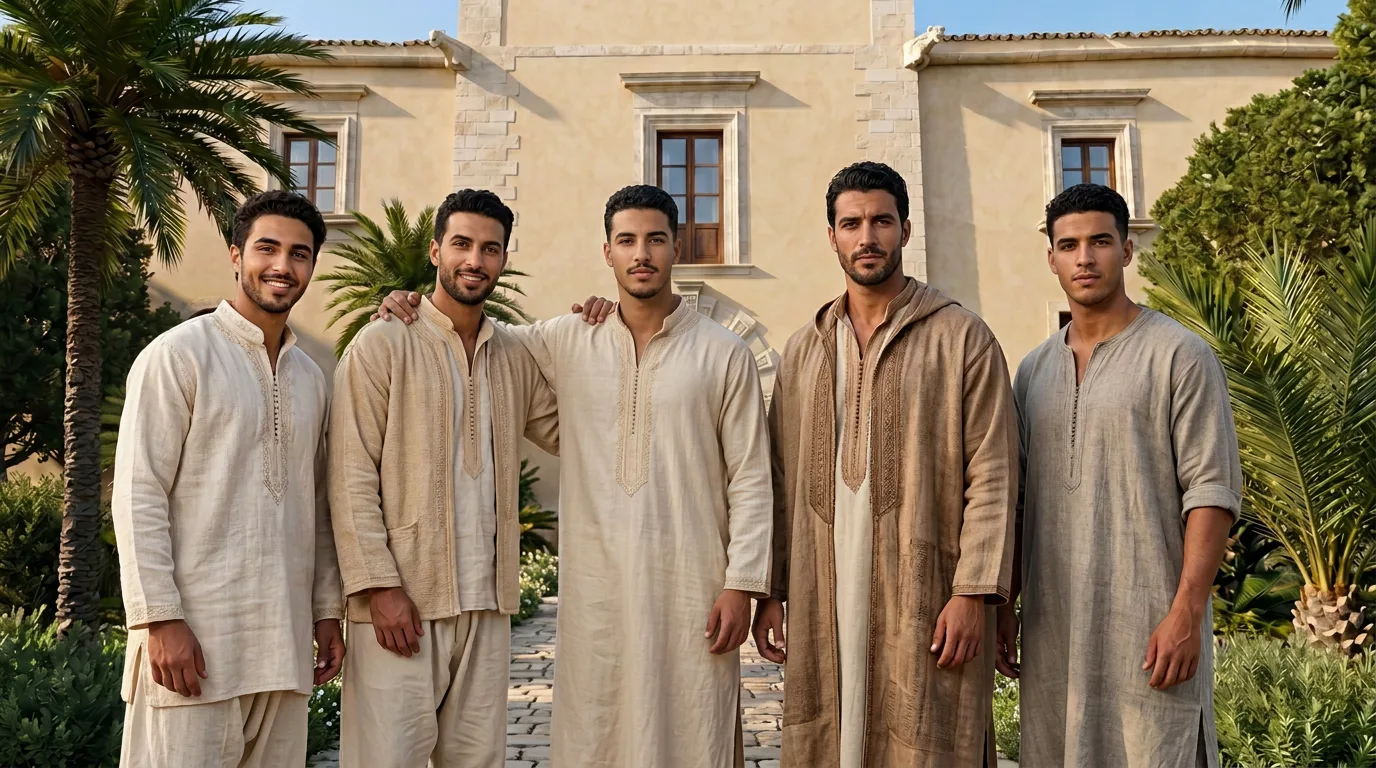
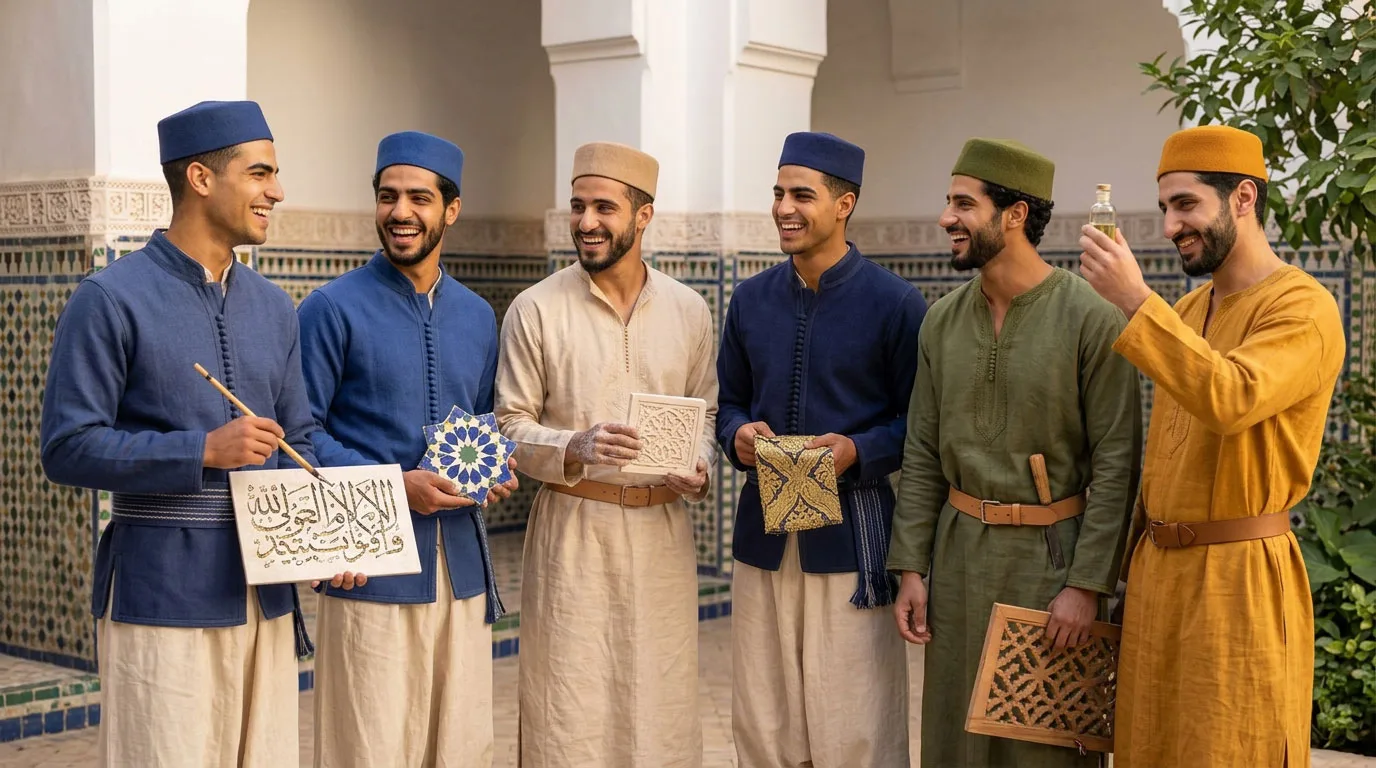
In the workshop a young Sicilian or European and a young Moroccan or Arab stand under the same discipline. The one relearns the value of tradition and of the hand; the other finds a community that neither tolerates him paternalistically nor judges him by origin: it asks him for rigour, and recognises honour if he earns it. From that fraternity of craft arises, if it arises, reciprocal knowledge — and a civil bond between Europe and Morocco, or other Arab countries, held by work, not by preaching.
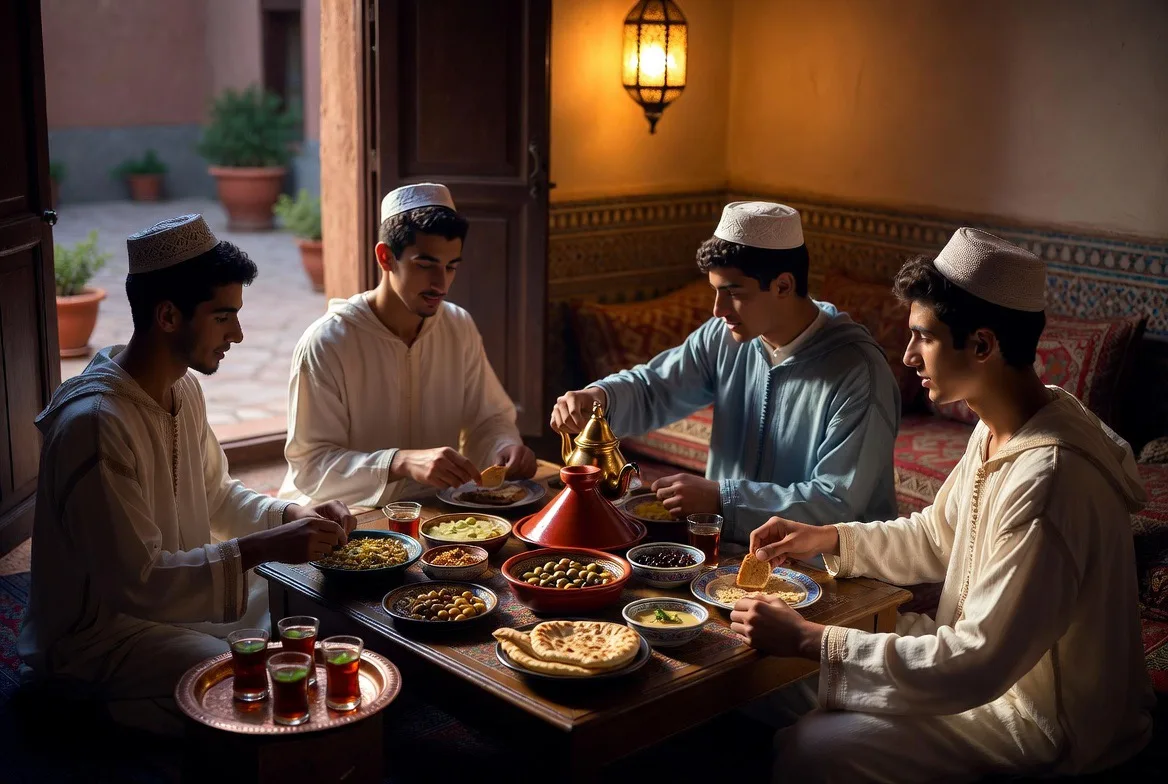
The same house can speak, by example, also to other Muslim communities present in Europe: not from a tribunal, but from a habitable measure — futuwwa, furūsiyya, craft — an alternative to isolation and to radicalisation.
One pays for the walls; one does not buy the bed. The bridge is not a rhetorical addition: it is the very reason of the house.
The institution·How one enters·The body and the day·Questions·Al-Mithaq·Riad Al-Uns